31-year-old dumpster diver brought in $140,000 in 12 months: I 'did much more than I thought was possible'
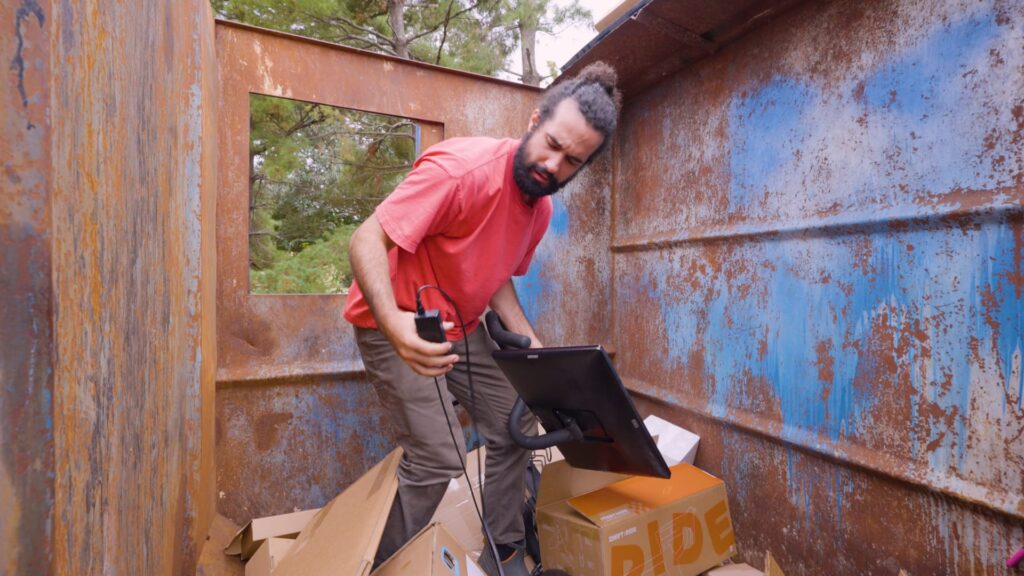
When Carter Stevens tells people he makes six figures a year digging through dumpsters, they often assume he’s “blowing smoke,” he says.
Not everyone sees dollar signs in a brimming dumpster. But Stevens earned roughly $140,000 in total sales between September 2025 and September 2026 by salvaging trashed items, cleaning them up and selling them on platforms like eBay and Facebook Marketplace, according to documents reviewed by CNBC Make It.
Stevens primarily operates near office parks and luxury condominiums around Nashville, Tennessee. Since March 2024, when he started dumpster diving, he’s found and sold hand-crafted Persian rugs, high-end office chairs and even samurai swords, he says. Trash-picking helps him keep his shipping costs low, he adds: Some of his supplies, like cardboard boxes and packing tape, also come from dumpsters, enough that he doesn’t have to pay for them approximately “90% of the time.”
“The amount of waste in this country that you’ll find is unbelievable. We throw so much stuff out,” says Stevens, 31.
Sometimes, Stevens asks a building for permission to go through its trash, marketing himself as a junk removal service. In that way, his job is similar — though not identical, because he generally only takes what he can sell, he says — to other entrepreneurs across the U.S. who follow advice in Reddit threads or YouTube tutorials to launch junk removal side hustles or full-time businesses. There are around 10,000 junk removal businesses across the U.S., according to the Better Business Bureau. They range in scale from independent side hustles to national companies like 1-800-GOT-JUNK, which touts more than 150 franchise locations.
Other times, Stevens finds himself neck deep in rubbish, ducking concerned security guards, peeling away actual trash and rotting food in the hope of uncovering discarded treasure, he says. He tries to avoid sneaking around and keeps an eye out for “no trespassing” signs. He’d rather leave items behind if a property owner or security guard tells him to vacate the premises, he says.
Even Stevens expresses surprise at how much money he’s made, saying he doesn’t necessarily think his annual income is sustainable. When he “stumbled into” dumpster diving, he was approximately $12,000 in debt after years of poor spending habits fueled partially by a drug addiction, a stark change from his affluent childhood, he says.
“I dug myself out of a hole. I built up my savings. I really did much more than I thought was possible,” says Stevens.
Battling addiction, turning trash into ‘a little bit of money’
Stevens, a Nashville native, is the son of a five-time Grammy Award-winning producer of country and gospel music who has worked with artists like Blake Shelton and Carrie Underwood. His life took a turn in college when he developed an addiction to prescription Adderall, leading him to drop out partway through his senior year in 2018, he says.
His lack of a college degree made landing full-time work a challenge. He says his parents can afford to support him financially, and they’ve done so in specific emergency occasions. But mostly, his father wants his kids to learn to fend for themselves, he says: “He will let me sit on the coals for the sake of learning how to swim. That’s taught me a lot [and] given me a lot of valuable skills and a tough mentality.”
Unemployed, Stevens started combing through thrift shops and Goodwill clothing racks for vintage apparel to sell on eBay. He was inspired by YouTube influencers like Rick Senko, he says, whose Fort Lauderdale, Florida-based clothing resale business Technsports brought in $6.5 million in annual revenue as recently as 2024.
Carter Stevens is a Nashville-based dumpster diver.
Source: CNBC Make It
But Stevens’ returns were inconsistent, and he often spent his profits on drugs or luxury shopping sprees, he says. After his parents funded a rehab stint in 2021 — helping him “quit doing the hard drugs,” he says — he spent his money chasing other dopamine hits. Those indulgences included a $1,200 pair of Christian Dior Birkenstock sandals, an 85-inch flat-screen television and a $30,000 down payment on a Mercedes-AMG sedan that he later lost because he couldn’t afford the total cost, he says.
By June 2023, he could no longer afford to pay rent, so he lived in a rented storage unit until the business’s security found and evicted him, and then stayed in his Nissan Sentra for three weeks, he says. Homelessness shocked him into learning to manage his “reckless” spending habits, he says: “Being punished by your own spending addiction was a wringer that I promised myself I can’t be put through again.”
In October 2023, a cousin lent him money to start renting an apartment, and Stevens worked to stick to a sensible enough budget for his thrifting income to cover future rent and basic expenses, he says. Five months later, he found a discarded pair of black Nike Air Force Ones in good condition next to a gas station pump. He took them home, sanitized them and sold them online for $35, he says.
“That was the first time I had ever found something that was trash and sold it and made a little bit of money,” says Stevens.
‘Almost every piece of furniture in my apartment came from a dumpster’
Once he started dumpster diving, Stevens was hooked “because I never stopped finding good stuff in these dumpsters,” he says.
His biggest score to date: dozens of discarded Steelcase office chairs, worth $1,000-plus each when new, outside an overflowing office park dumpster, he says. He got his car — by this point, a used pickup truck and a self-built trailer — and hauled away 190 chairs to list online at hundreds of dollars apiece. He sold the majority of them in bulk transactions on Facebook Marketplace for $17,000, and brought in an additional $10,600 selling the remaining chairs individually, documents show.
If Stevens manages to find roughly one valuable haul per month, he can fill his $400-a-month storage unit and start listing the items. For the most part, he scopes out corporate environments, preferring “dry dumpsters” over ones laden with food waste, he says. Office trash is particularly profitable when companies downsize, says Stevens: Once, he found 120 standing desks discarded outside a building.
Near high-end apartment buildings, Stevens has found furniture from brands like West Elm, iPads, electronics and power tools in working condition, he says. “Almost every piece of furniture in my apartment came from a dumpster,” says Stevens.
Stevens works alone and minimizes gas costs by sticking to locations within a few miles from his apartment. The majority of his income has come from big hauls across his five highest-earning months, reflecting the venture’s hit-or-miss nature. “I got really lucky earlier this year and I made a ton of money. I’m not acting like this is something I could do every year,” he says.
So he saves as much of his earnings as possible, “constantly” talking himself out of unnecessary purchases, he says. And he’s studying the business of real estate wholesaling — which involves securing contracts for distressed properties and flipping them to investors for a fee — as a potentially more secure way to earn a living, he adds.
Still, he acknowledges the allure of knowing his next big payday could always be one dumpster away.
“I don’t see myself ever turning down a good looking dumpster,” says Stevens. “I have found so much cool stuff that I feel like I’ll always be curious about what’s in that dumpster.”