Brent oil closes at $100 after Iran's new supreme leader says Strait of Hormuz must remain closed
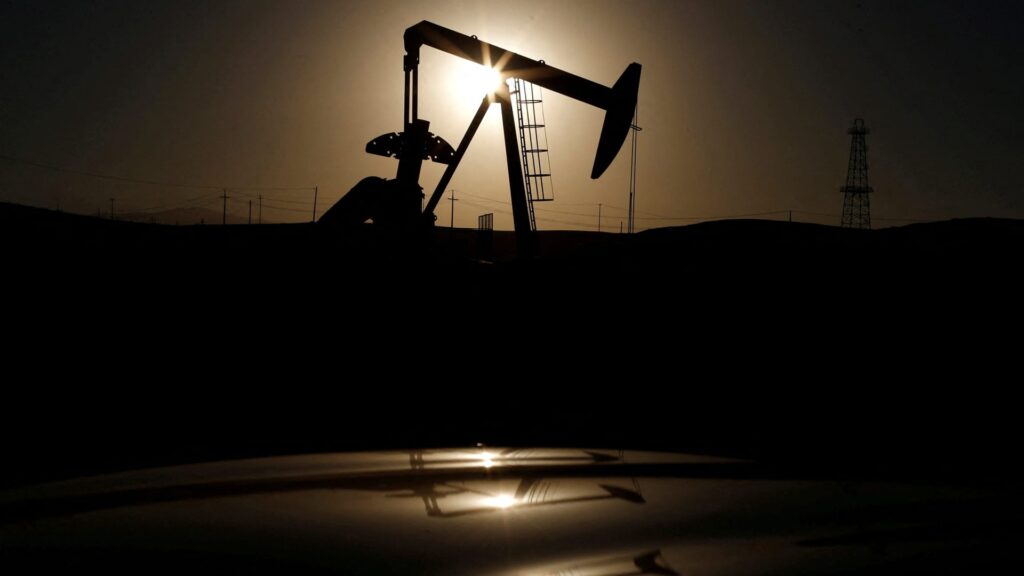

Oil prices closed at $100 per barrel Thursday after Iran’s new supreme leader Mojtaba Khamenei said the Strait of Hormuz must remain closed to pressure the U.S., the latest sign the market may face a prolonged supply disruption.
International benchmark Brent crude gained 9.22%, or $8.48, to close at $100.46 per barrel. U.S. West Texas Intermediate futures rose 9.72%, or $8.48, to settle at $95.73.
Mojtaba is the son of Ayatollah Ali Khamenei, who was killed by the U.S. and Israel in the opening strikes of the war. His comments come as attacks on commercial vessels in the Persian Gulf continue.
Energy Secretary Chris Wright told CNBC earlier Thursday that the U.S. Navy is not ready to escort tankers through the Strait yet. U.S. military assets in the region are focused on destroying Iran’s offensive capabilities, Wright said.
Two oil tankers and a cargo ship were struck off the coasts of Iraq and the United Arab Emirates overnight, authorities said, the latest attacks in or near the strategically crucial Strait. Roughly a fifth of global oil supply passes through the Strait, which links the Persian Gulf to global markets.
Emergency stockpiles
The attacks on shipping came after the International Energy Agency announced its largest emergency release of crude reserves in history.
The oil market shrugged off the stockpile release, highlighting traders’ skepticism that the measure can bridge the supply gap triggered by the closure of the Strait.
“As we have said repeatedly, the only way to see oil prices trade lower on a sustained basis is by getting oil flowing through the Strait of Hormuz,” strategists at Dutch bank ING said in a research note published Thursday. “Failing to do so means that the market highs are still ahead of us.”

Brent oil prices YTD
The IEA member countries agreed Wednesday to release 400 million barrels of oil from their emergency reserves. The U.S. announced that it would release 172 million barrels from its Strategic Petroleum Reserve as part of that effort.
The record IEA stock release will add needed volumes to the market, but it will only close up to a quarter of the supply gap tiggered by the closure of the Strait, said Saul Kavonic, energy analyst at MST Marquee.
“The IEA decision also signals how acute the oil shortage risk is, suggesting the IEA does not believe the war is [likely] to end soon, and stock draws now will need to be replaced later, portending higher prices even after the war ends,” Kavonic told CNBC.
Timing and logistics remain unclear
One key reason markets remain uneasy is uncertainty about how quickly the barrels will reach the market, said industry veterans.
While the IEA’s announcement marked an unprecedented intervention, the agency did not provide details on how fast individual countries will release their reserves or how the oil will be distributed. It will take 120 days for the U.S. to complete the release of its barrels, Energy Secretary Wright said.

Strategic stockpiles are held separately by each IEA member country, meaning technical and logistical constraints could slow the flow of barrels. It could take 60 to 90 days before the oil meaningfully reaches the market which is not the immediate relief that traders wanted, said Pavel Molchanov, senior investment strategist at Raymond James.
“Four hundred million is a big number,” Molchanov said. “But this is the largest oil supply disruption since at least the 1970s so we need a lot of oil, and we need it quickly,” he said.