12 types of Submarines: A detailed guide to powerful underwater naval vessels – The Times of India
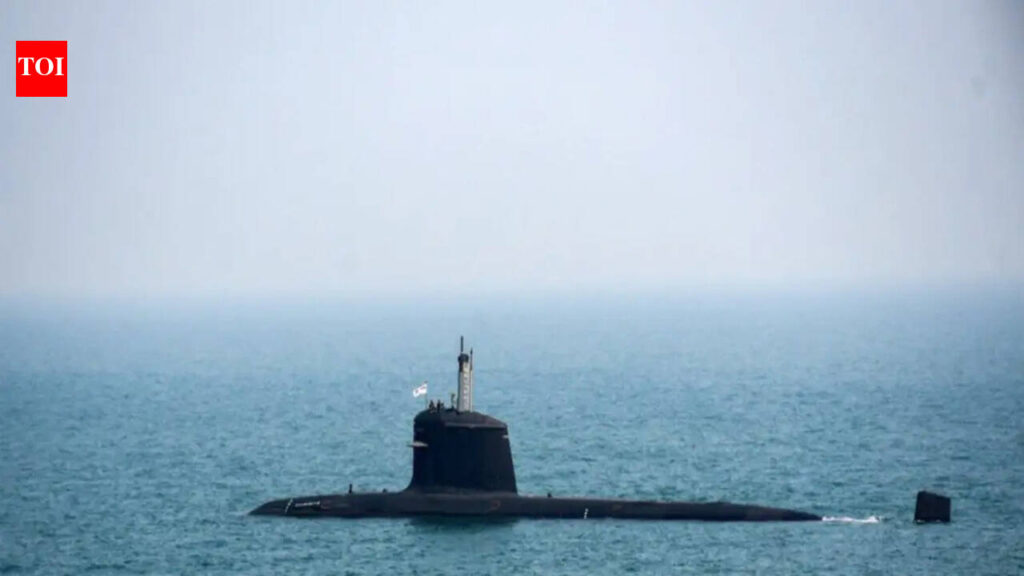
Submarines are among the most advanced and mysterious machines ever built. Designed to operate beneath the surface of the sea for extended periods, submarines play a major role in military defense, scientific exploration, underwater rescue, intelligence gathering, and even tourism. Their ability to travel unseen, strike unexpectedly, and survive in hostile environments makes them one of the most strategic assets in modern naval warfare. Over time, submarines have evolved from small hand-powered vessels into highly sophisticated machines powered by nuclear reactors and advanced batteries.There are many types of submarines, each designed for a specific purpose. Some are meant for warfare and missile launch operations, while others are built for research, rescue, or deep-sea exploration. This article explains the major types of submarines in detail, including their functions, features, and importance.
1. Military Submarines
Military submarines are the most common and well-known type of submarines. These vessels are operated by naval forces around the world and are primarily used for defense, surveillance, and combat missions. Military submarines are generally divided into two broad categories: attack submarines and ballistic missile submarines.They are built with stealth technology to avoid radar and sonar detection. Their outer hulls are designed to reduce noise, and they carry advanced weapons systems such as torpedoes, cruise missiles, and mines.
2. Attack Submarines (SSN / SSK)
Attack submarines are designed to hunt and destroy enemy ships, submarines, and naval assets. They are fast, agile, and heavily armed. Their main purpose is to protect fleets, gather intelligence, escort aircraft carriers, and attack enemy targets when necessary.There are two main types of attack submarines:
- Nuclear-Powered Attack Submarines (SSN): These submarines use nuclear reactors as their power source. Nuclear energy allows them to remain underwater for months without refueling. They are capable of traveling at high speeds and operating across oceans without surfacing. Because of their endurance and power, nuclear attack submarines are used by major naval powers such as United States, Russia, United Kingdom, and France.
- Diesel-Electric Attack Submarines (SSK): These submarines run on diesel engines when surfaced or snorkeling, and on battery power when submerged. They are quieter than many nuclear submarines during battery operation, making them effective in coastal waters and narrow seas. Diesel-electric submarines are cheaper to build and maintain, making them popular among smaller navies. However, they must surface or snorkel periodically to recharge batteries.
3. Ballistic Missile Submarines (SSBN)
Ballistic missile submarines are strategic submarines designed to carry nuclear missiles. Their primary role is nuclear deterrence. These submarines remain hidden underwater for long periods, ready to launch ballistic missiles if their country is attacked.Because of their stealth and survivability, they are considered one of the most important parts of a nation’s nuclear defense system. Even if land bases and air forces are destroyed, these submarines can retaliate.Countries such as India, China, United States, and Russia operate such submarines.These submarines are usually large, heavily protected, and equipped with advanced communication systems.
4. Guided Missile Submarines (SSGN)
Guided missile submarines are equipped with cruise missiles rather than ballistic missiles. These submarines are used to strike land targets, enemy ships, and strategic facilities with high precision.Unlike ballistic missile submarines, which are mainly for nuclear deterrence, guided missile submarines are often used in active military operations. They can launch missiles from long distances without being detected.Some guided missile submarines are converted from older ballistic missile submarines, giving them a new role in modern warfare.
5. Cruise Missile Submarines
Cruise missile submarines are specialized submarines designed to fire cruise missiles at land or sea targets. These missiles fly at low altitudes and are guided accurately to their targets.They are useful in modern conflicts because they can launch surprise attacks on military bases, radar systems, and command centers while remaining hidden underwater. Their use reduces risk to surface ships and aircraft.
6. Midget Submarines
Midget submarines are small submarines operated by a crew of one to six people. They are designed for short missions, shallow waters, harbor attacks, reconnaissance, sabotage, and special operations.Because of their compact size, they can enter narrow waterways where larger submarines cannot operate. During past wars, midget submarines were used to infiltrate enemy harbors and attack anchored ships.Today, some nations still use modern versions for coastal defense and covert missions.
7. Special Operations Submarines
These submarines are designed to support naval commandos and special forces units. Their mission includes inserting and extracting divers, surveillance teams, or underwater demolition experts.They may carry swimmer delivery vehicles, mini-submersibles, and special chambers that allow divers to exit while submerged. Such submarines are useful in covert military missions where secrecy is essential.They are often modified versions of larger attack submarines.
8. Research Submarines
Not all submarines are military. Research submarines are used by scientists to study oceans, marine life, geology, and underwater ecosystems. These submarines are equipped with cameras, robotic arms, sensors, and sampling tools.They help scientists explore coral reefs, deep trenches, hydrothermal vents, and shipwrecks. Research submarines have contributed greatly to oceanography and climate science.One famous example is Alvin, which has been used to explore the deep ocean and study underwater volcanic activity.
9. Rescue Submarines
Rescue submarines are specially built to save crews trapped in damaged submarines. They are compact, maneuverable, and able to dock with disabled submarines underwater.These vessels carry life-support systems and can transport survivors to the surface safely. They are an important part of naval emergency response systems.Modern rescue submarines are designed to operate in rough weather and at significant depths, where ordinary divers cannot work effectively.
10. Tourist and Civilian Submarines
Some submarines are designed for tourism and private exploration. These civilian submarines allow passengers to view marine life, coral reefs, and underwater landscapes through transparent domes or large windows.Tourist submarines operate in popular coastal destinations and are built with strong safety systems. They usually travel at shallow depths and for short durations.Private luxury submarines are also being developed for wealthy buyers, marine explorers, and underwater researchers.
11. Autonomous and Unmanned Submarines
Modern technology has introduced unmanned underwater vehicles (UUVs), which function like robotic submarines. These vehicles do not require onboard crew and are remotely operated or fully autonomous.They are used for mine detection, seabed mapping, surveillance, cable inspection, underwater photography, and scientific research. Naval forces increasingly rely on unmanned submarines because they reduce risk to human crews.As artificial intelligence improves, autonomous submarines are expected to become more common in both civilian and military sectors.
12. Deep-Sea Exploration Submersibles
These are specialized submarines built to descend to extreme ocean depths. They are designed with pressure-resistant hulls made from titanium or other advanced materials.Deep-sea submersibles are used to explore ocean trenches, locate wrecks, and conduct scientific missions in areas where sunlight never reaches.One famous example is Trieste, which reached the Mariana Trench in 1960. Such missions expanded human understanding of the deepest parts of Earth’s oceans.
Difference Between Nuclear and Diesel Submarines
One of the most important distinctions among submarines is their power source.Nuclear submarines can stay submerged for months, travel long distances, and maintain high speeds. They are expensive and technologically complex.Diesel-electric submarines are cheaper, quieter in battery mode, and highly effective in coastal defense. However, they have limited endurance and need periodic battery charging.Each type is useful depending on national strategy, geography, and budget.
Importance of Submarines in the modern world
Submarines are vital because oceans cover most of Earth’s surface. Nations use submarines to protect trade routes, monitor enemy movements, defend coastlines, and maintain strategic deterrence. Scientists use them to explore underwater ecosystems and discover unknown species. Engineers use them to inspect pipelines and communication cables.As technology advances, submarines are becoming quieter, smarter, and more versatile.Submarines are remarkable machines that serve many different purposes. From nuclear ballistic missile submarines that guard national security to research submarines that unlock the secrets of the ocean, each type has a unique role. Attack submarines dominate naval warfare, rescue submarines save lives, and unmanned submarines represent the future of underwater operations.The wide variety of submarine designs shows how important the underwater world has become for defense, science, and industry. As nations and researchers continue to invest in marine technology, submarines will remain one of the most valuable tools beneath the sea.