Oil prices fall after Vance says more than 12 million barrels exit Strait of Hormuz
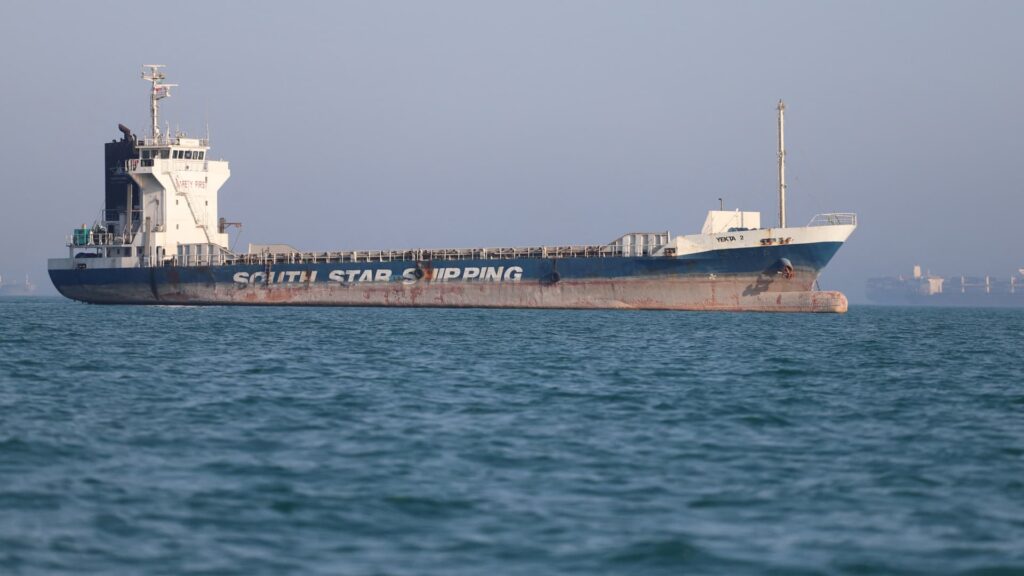

Oil prices fell Thursday after Vice President JD Vance said tankers with more than 12 million barrels crossed the Strait of Hormuz overnight.
“That is a high since the beginning of the conflict,” Vance told reporters at a White House press briefing. Around 14 million barrels per day of oil and 6 million bpd of refined products passed through Hormuz before the war.
Brent crude futures, the international benchmark, fell 2.7% to $77.40 a barrel by 11:36 a.m. ET. West Texas Intermediate futures fell 2.96% to $74.52 per barrel.
President Donald Trump signed a deal Wednesday with his Iranian counterpart Masoud Pezeshkian to end the war in the Middle East. Under the deal, Iran must allow ships to transit Hormuz without paying tolls for 60 days, while the U.S. is supposed to lift its naval blockade.
“The Iranians, for the second night in a row, did not shoot at any ships in the Strait of Hormuz,” Vance told reporters. “So far they are honoring their end of the commitment.”
“On the blockade, CENTCOM allowed north of a dozen ships to go through our naval blockade, and so we’re also honoring our end of the early part of the agreement,” the vice president said.
Veteran oil analysts warn the opening of Hormuz will not necessarily resolve the massive supply disruption. The market will face a reckoning later this year when data show the enormous the hole in supply and inventories, said Bob McNally, president of Rapidan Energy.
The agreement between the U.S. and Iran is really a temporary truce, McNally told CNBC. “This is nothing more than an expensive ransom payment for about at least 65 million barrels that’s trapped inside Hormuz,” the analyst said.
Trump hopes the deal will allow the Gulf Arab states to ramp production and prevent a summer supply crunch that analysts were warning about, said McNally, who was a senior energy advisor to President George W. Bush.
“He bought some time, he’s bought some oil,” the analyst said. “Let’s see if it sticks and leads to that rebalancing, that reflow of supply that he hopes.”
—CNBC’s Hugh Leask contributed to the report.