Why England's controversial goal vs Norway was valid in quarterfinal clash: Explained
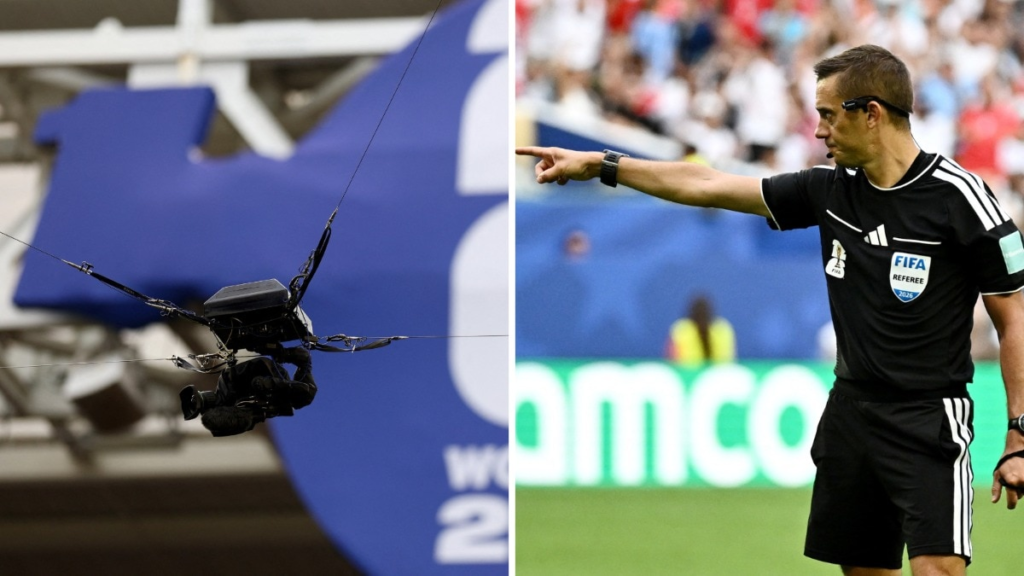
England booked their place in the FIFA World Cup 2026 semi-finals with a dramatic 2-1 extra-time victory over Norway, but it was another refereeing controversy that dominated the post-match discussion.
The flashpoint came moments before Jude Bellingham’s first-half stoppage-time equaliser, when Norway goalkeeper Orjan Nyland’s long goal kick appeared to change direction in the air, prompting claims that it had brushed one of the overhead camera cables suspended above the pitch.
Norway’s players immediately appealed to French referee Clement Turpin, arguing the ball had struck the cable before England regained possession and worked the ball to Bellingham, who fired home the leveller. Bellingham later scored again in extra time to seal England’s comeback and send Thomas Tuchel’s side into the last four.
FIFA has since moved to clarify the incident, insisting Connected Ball Technology detected no contact with the overhead wire.
WATCH THE VIDEO HERE
NO CABLE CONTACT
In a statement issued after the match, FIFA said data from the Connected Ball showed no evidence that the ball had touched the cable before England’s goal.
“Before England’s goal in minute 45+2 against Norway, the sensor in the Connected Ball showed no peak in the ‘heartbeat of the ball’ when in the air, and therefore no evidence that the ball touched the overhead wire and changed the movement of the ball,” FIFA said.
Norway vs England, FIFA World Cup 2026: Highlights | Report
Under the Laws of the Game, play must be stopped if the ball makes contact with an outside object such as an overhead cable, with possession restarting through a dropped ball. Because officials did not determine that the ball had struck the wire, play continued uninterrupted.
FIFA’s explanation effectively confirmed that the decision to allow play to continue was consistent with the data collected by the tournament’s Connected Ball Technology, despite television replays appearing to show a slight deviation in the ball’s flight.
NORWAY’S FRUSTRATION
The incident left the Norwegian camp furious.
Nyland slapped the turf after England scored, while striker Erling Haaland and head coach Stale Solbakken confronted Turpin as the teams headed into the dressing room at half-time.
Norway’s frustration only deepened later in the match when Leo Heggem thought he had equalised from a Martin Odegaard corner. After being advised by VAR Jerome Brisard to review the incident, Turpin ruled out the goal after determining Haaland had fouled Elliot Anderson before the corner was taken.
Unlike the cable incident, the second decision followed a formal on-field review and was communicated to the crowd, but it added to Norway’s sense that key moments were consistently going against them.
The controversy also revived memories of other officiating flashpoints earlier in the tournament. Brisard was the VAR for Argentina’s 3-2 quarterfinal victory over Egypt, where a goal was ruled out after a lengthy review for a foul in the build-up, a decision that sparked strong protests from the Egyptian camp. Croatia’s elimination to Portugal also fuelled debate after Connected Ball Technology detected the slightest touch that resulted in an offside decision.
Those incidents have intensified scrutiny over the consistency of officiating and the application of technology at the World Cup.
While FIFA’s statement has settled the question of whether the ball struck the overhead cable before Bellingham’s equaliser, it is unlikely to end the broader debate. For Norway, whose impressive World Cup run ended in heartbreaking fashion, the sense of grievance remained even after the governing body explained why England’s goal was allowed to stand.
FIFA World Cup | FIFA World Cup Schedule | FIFA World Cup Points Table | Football News
– Ends