Cricket has given Sarfaraz Khan another chance. He has to make it count now
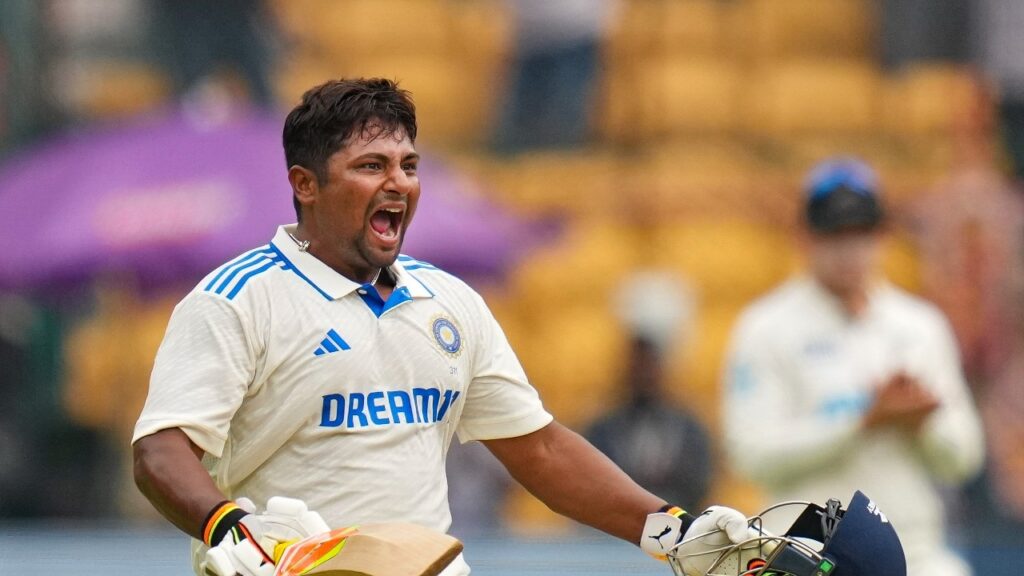
There is a particular kind of cricketing limbo reserved for batters who score too many runs to be ignored yet never quite get enough opportunities to be trusted. Sarfaraz Khan has lived in that space for the better part of two years. On Sunday, the door opened again. The Mumbai batter was named as Sai Sudharsan’s replacement in India’s injury-hit squad for the two-match Test series in Sri Lanka, stepping back into the national setup for the first time since 2024.
It is a recall built less on a single innings and more on a long, occasionally lonely fight to get back into the reckoning. But Indian cricket’s recent past carries a warning for anyone handed another opportunity: the door that opens once does not always stay open, and how you use the runs you’re given can matter more than how many of them you score.
A CENTURY THAT SHOULD HAVE CHANGED EVERYTHING
Rewind to late 2024. India were in the middle of a home collapse against New Zealand, a series that would end in a historic 0-3 whitewash, the first time India had been swept in a three-Test series at home. Amid the wreckage, Sarfaraz produced one of the few genuine bright spots, a defiant 150 in the series opener in Bengaluru, the kind of innings that is supposed to cement a career rather than merely punctuate it.
It did not work out that way. He managed only a highest score of 11 for the rest of the series, and when India named their squad for the Border-Gavaskar Trophy in Australia, Sarfaraz travelled but never got a game. His Test exile began soon after. He was left out of India’s squad for last year’s tour of England but was picked for India A, continuing to push his case on the domestic and A-team circuit.
For a batter with six Tests, 371 runs, a century and three fifties to his name, and a first-class average of 64.73, one of the best in the country, it was a strange kind of exile. The numbers kept him in the conversation. The opportunities did not.
RUNS NOBODY COULD IGNORE
What Sarfaraz did next was straightforward: he kept scoring.
In the 2025 Ranji Trophy season, he was Mumbai’s second-highest run-scorer, piling up 429 runs in seven games at an average of 53.62. He was also picked for the West Zone squad for the Duleep Trophy, although injury ruled him out. Domestic cricket, at least, continued to give him opportunities to make his case.
But there was another conversation trailing him throughout, one about fitness, not footwork. It had followed him for years, an easy criticism to level at a batter whose bat often spoke louder than his physique. Sarfaraz decided to remove the argument altogether.
Over roughly six weeks, he shed close to 17 kilograms through a strict diet and fitness regime. He cut out roti, rice, sugar, flour and baked foods, while changing his diet to include more fruit and vegetables, grilled fish and chicken, boiled eggs, avocado and green tea.
It was a significant transformation, another part of his attempt to force his way back into India’s plans.
THE IPL LIFELINE
Two years without an IPL deal, in 2024 and 2025, could have quietly ended the conversation around Sarfaraz altogether. Instead, Chennai Super Kings gave him a route back into the spotlight in 2026, buying him for Rs 75 lakh. He made the opportunity count.
Sarfaraz scored 161 runs at a strike rate of 169.47, including one fifty, showing the freedom and aggression that have always been part of his game. It was not enough on its own to bring him back into India’s Test plans, but it kept his name in the conversation.
Then came the opening. Sai Sudharsan was ruled out with a stress reaction in his right toe, and the selectors turned back to Sarfaraz.
Days before his recall was confirmed, Sarfaraz posted a message on Instagram, sharing a line from the Telugu film Jersey: “I may not fit in, but I’ll fight.”
The post quickly drew attention amid speculation over his India return. It fitted neatly with the story of his career over the past two years: a batter who kept putting runs on the board while waiting for another opportunity at the highest level.
Now, that opportunity has arrived. And Indian cricket’s recent history has already shown that getting the second chance is only half the battle.
THE KARUN NAIR WARNING
In 2022, Karun Nair posted a message on social media that read: “Dear cricket, please give me another chance.” The message went viral, resonating with fans and fellow cricketers alike. It captured the frustration of a batter who had once scored a triple century for India and still found himself on the outside looking in.
Three years later, that chance came, earned largely through the consistency he had shown in domestic cricket.
Nair had a phenomenal 2024-25 domestic season, scoring 863 runs in nine Ranji Trophy games at an average of 53.93 and playing a pivotal role in Vidarbha’s historic third Ranji Trophy title. He scored four centuries and two fifties, including a crucial knock in the final. He was even more prolific in the Vijay Hazare Trophy, where he amassed 779 runs in eight innings at an average of 389.50 and a strike rate of 124.04, with five centuries.
The numbers forced their way into the conversation. After eight years, Nair was back in the Indian team.
But the return has not gone the way he would have hoped. He scored 205 runs in eight innings at an average of 25.62. There were starts and some exquisite drives, but not the big score that could have changed the narrative around him.
Nair’s comeback had all the ingredients of an inspirational story. A triple-centurion who had spent years outside the Indian team, a plea for another chance, a mountain of domestic runs and, eventually, another India cap. But international cricket has proved far less forgiving.
Domestic dominance can reopen the door. International cricket decides whether you get to stay.
That is the warning now hanging over Sarfaraz’s own comeback. Getting another opportunity is difficult. Making it count is harder.
SARFARAZ MUST GRAB HIS SECOND CHANCE
Sarfaraz is 28, not 33. That gives him a meaningful cushion that Karun Nair did not have when he returned to the Indian team. But everything else about his situation should sharpen, rather than soften, the urgency.
He is returning as an injury replacement, rather than as a first-choice selection, which makes the opportunity inherently less secure. Sai Sudharsan is recovering, not retired. Sarfaraz is filling a vacancy, not claiming a permanent place.
Unlike Nair, Sarfaraz also has recent Test pedigree to lean on. His 150 in Bengaluru briefly looked like the innings that would establish him in India’s middle order. Instead, it became a reminder of how quickly momentum can disappear. He did not get a chance in Australia, and his subsequent absence from the Test setup showed that one big innings is rarely enough to secure a place.
That is the reality Sarfaraz now faces in Sri Lanka. Domestic runs got him back into the conversation. IPL form strengthened his case. But none of it will matter if he cannot turn starts into substantial scores when his opportunity comes.
Nair’s 205 runs at 25.62 offer Sarfaraz a warning. Getting in, looking good and getting out will not be enough. He needs the kind of scores that make it difficult for the selectors to look elsewhere.
Test cricket rarely hands out second chances for free. Indian cricket, with its depth of batting talent, can be even less forgiving.
Sarfaraz knows how difficult it is to get back into India’s Test plans. He has spent the better part of two years learning that lesson.
Now, he has another chance. The runs that brought him back have done their job. The next step is entirely his.
Because in Indian cricket, the door can open again. But when it does, you have to make sure you give the selectors a reason to keep it open.
– Ends