For India, the Mecca pact is a setback. For China, it's a warning
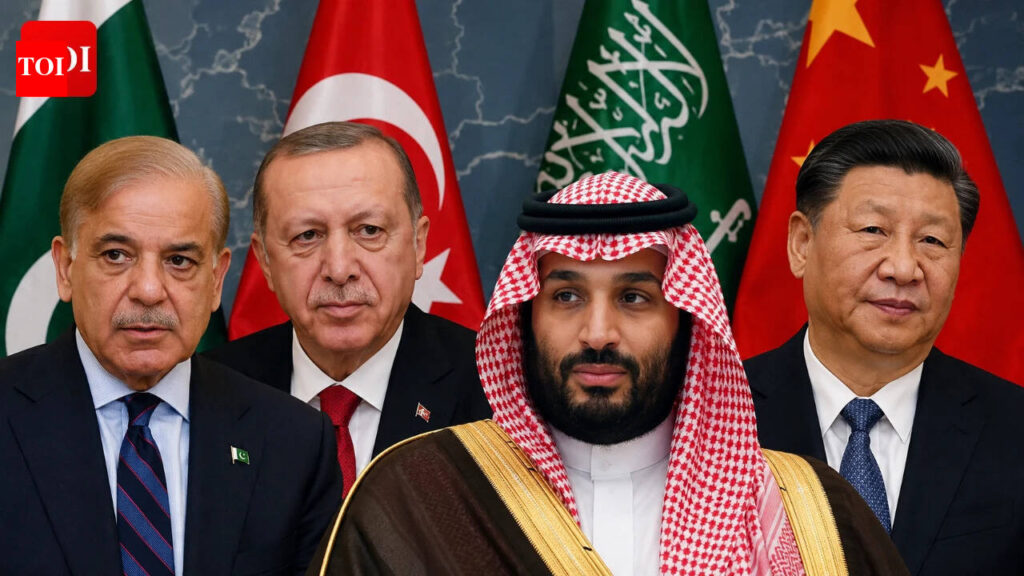
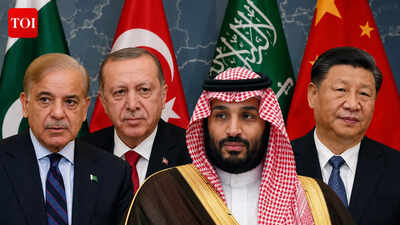
Mecca pact: Pakistan, Saudi Arabia & Turkey’s defence deal might end up being a big headache for China.
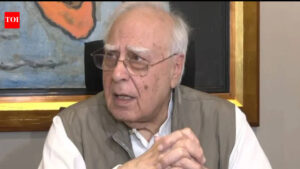
Pakistan, Saudi Arabia, and Turkey signed a Nato-style mutual defence agreement in Mecca on August 7, declaring that “any armed attack against any one of the three states shall be regarded as an attack against them all”.There is no other way to put it: The new Pakistan-Saudi Arabia-Turkey defence pact is a setback for India. True, it’s not directly aimed at India and one of the main financers of the deal, Saudi Arabia, is not agnostic towards India. In fact, India-Saudi Arabia ties have grown many folds in recent years.But, if Pakistan is involved in any defence pact and that too as a net security provider, India will have to take note of it. Kanwal Sibal, India’s former foreign secretary, described the development as a “very negative development for Indian interests”.
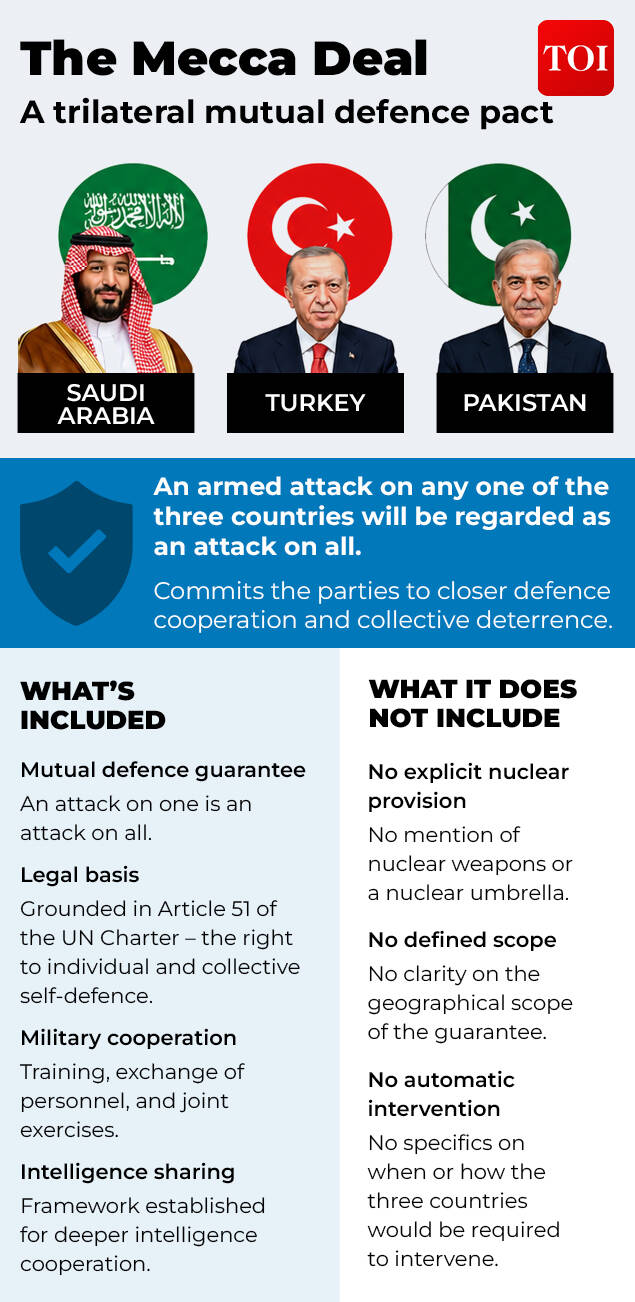
The Mecca agreement aims to strengthen defence cooperation and collective deterrence among Turkey, Saudi Arabia and Pakistan.
The pact may embolden Pakistan to take a more belligerent attitude towards India. Even if Saudi Arabia refuses to support Pakistan militarily in an India-Pakistan conflict, Islamabad could potentially benefit from intelligence cooperation, weapons flows, diplomatic support or financial assistance.Then, there is the issue of growing defence cooperation between Pakistan and Turkey. It was quite visible during Operation Sindoor. So, the Mecca pact is definitely a concerning development for India.
What about China
For now, Beijing looks like a quiet winner. Its entire approach to the Gulf has rested on staying friendly with everyone at once. It’s been arming Pakistan, buying Iranian oil, courting Saudi Arabia and Turkey, and doing business with the UAE without ever picking a side.With the new defence pact, Chinese weapon systems could even gain greater access to Gulf markets through Pakistan.But that is only half the story.
Why China should be wary of it
The Mecca pact could also become a strategic setback for China if it succeeds in doing what Washington increasingly wants its partners to do: Assume a larger share of their own defence burden.“The Pak-KSA-Turkey agreement is a logical outgrowth of the deepening security ties of these 3 countries in recent months. With its focus on collective regional deterrence with an eye to Iran, it’ll be received well in Washington, which wants to see more burden-sharing from top allies,” Michael Kugelman of the Atlantic Council wrote on X.A more self-reliant Saudi Arabia, Turkey and Pakistan could reduce the need for constant US military attention in West Asia. That, in turn, could give Washington greater capacity to concentrate on its principal long-term competitor: China.
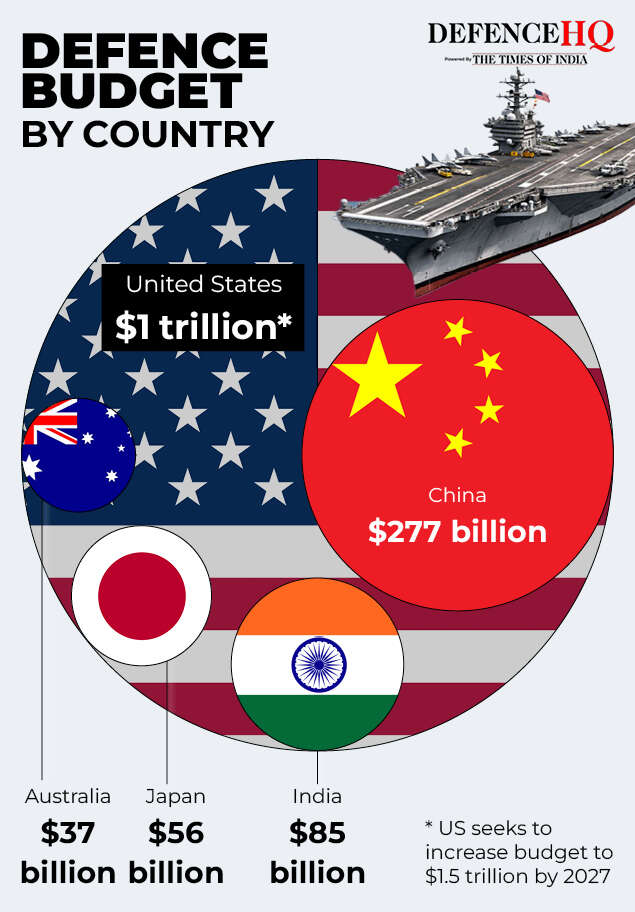
The Mecca pact may provide the US more leeway to put extra focus on the Indo-Pacific region and China.
The US regards China, not Russia or Iran, as its principal long-term strategic competitor.Any potential reduction in American military burdens in West Asia may allow Washington to devote additional resources on the Indo-Pacific front, critical minerals, advanced technology, supply-chain resilience and alliances surrounding China.That is the paradox at the heart of the Mecca agreement.China could still profit commercially. Pakistani familiarity with Chinese equipment could introduce more Chinese systems into Saudi Arabia. Beijing could remain an important diplomatic and economic partner for every member of the pact.But those gains may incur costs too.“China would be careful not to become a major arms supplier to the region to undermine US interests there. US can step up arms supplies to Taiwan in retaliation,” Kanwal Sibal wrote on X.
The big picture
For Beijing, the most consequential lesson from the upheaval stretching from Ukraine to the Gulf may not be the emergence of another regional defence alliance. It’s about how difficult modern wars have become to even end on favourable terms.The US and Israel have inflicted enormous damage on Iran, but have yet to force Tehran into submission or eliminate its ability to impose costs across the Gulf. Russia, despite its vastly larger military and economic resources, has also failed to secure a decisive victory over Ukraine after years of war. Both conflicts underline an uncomfortable reality of our times: Military alliance or superiority is no guarantee for a win even against a weaker adversary.That matters enormously for Taiwan. Both Russia-Ukraine and Israel-US-Iran wars may make China wary of going for a forced unification of Taiwan.Chinese President Xi Jinping has made reunification with Taiwan a defining national objective. As per reports, Xi’s plan for the PLA is to have the military capability to go for a unification with Taiwan by 2027. This looks increasingly difficult, though.At the same time, China’s increasingly muscular diplomacy and military posture have produced their own counter-reaction in East Asia. Japan is accelerating its military build-up, expanding strike capabilities and treating a Taiwan contingency as increasingly relevant to its own security. What Beijing once dismissed as the fading architecture of US power in Asia is, in several respects, becoming more militarised in response to China’s rise.That is the paradox of China’s “wolf warrior” era: Pressure intended to make neighbouring countries accommodate Beijing has also encouraged some of them to strengthen military cooperation with Washington and spend more on defence.
What’s next
The crucial question is whether the Mecca pact remains political deterrence or develops into genuine military integration. Joint exercises will matter. So will intelligence-sharing, command structures, defence-industrial partnerships, technology transfers and procurement decisions.For India, the key test will be whether Saudi Arabia allows Pakistan to internationalise future India-Pakistan confrontations through the new framework.For China, watch something different: Whether the pact actually provides the US more leeway to put extra focus on the Indo-Pacific region.