India escape pool stages at Hockey World Cup, but old habits still remain
“Old habits die hard.”
It’s an expression has been used for centuries to describe deeply rooted habits, behaviors, and personal tendencies that are difficult to change. When it comes to the Indian men’s hockey team, it seems like one that fits them for better or worse.
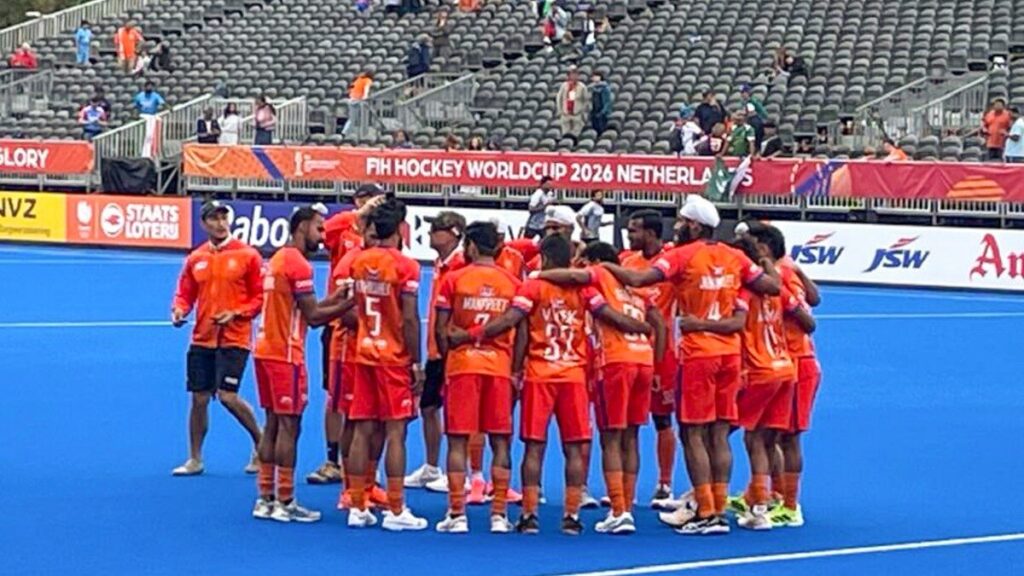
India were able to secure a 5-3 win against Pakistan on Wednesday, August 19, to make sure that they progressed to the second round of the men’s Hockey World Cup 2026.
INDIA VS PAKISTAN, HOCKEY WORLD CUP HIGHLIGHTS
It was a performance that would surely divide opinion across the board. There was dominance from the Indian side as they put Pakistan to the sword early on to score three goals early on. There was efficiency and game awareness to see off the contest that in the end, became a little too chaotic for the liking of Harmanpreet Singh and Co.
The result was an expected one as Pakistan have failed beat India for more than 10 years now, but it was then manner in which India performed that probably will raise a lot of questions with tougher opponents waiting for them in the next phase.
INDIA’S ATTACK STILL LACKING FIREPOWER
The first bit to look at was how India got off the blocks quickly. The high press from the forwards was a treat to watch as they constantly cut off any channel for Pakistan to play aerial balls from the back.
This led to constant turnovers and India creating as many as four penalty corners in the first quarter. By the time the hooter went off for the first time, India were 2-0 up.
Once again it was Harmanpreet who opened the scoring to continue his good run of form. Abhishek showed yet again why he is ready to be the new leader of the attack, with sensational bit of play in the D to score two goals.
But apart from these two, it seems like India didn’t have a plan B or C for their attack. It almost felt like all the hopes were pinned on these two to bail them out.
Mandeep Singh is playing his fourth World Cup and has been India’s Mr. Dependable when it comes to playing a poacher’s role. He has made 291 appearances and scored 125 goals.
Yet during the ongoing tournament, he hasn’t looked like he is in his best avatar. He has often meandered around in the game, Being a target man isn’t always going to help him. With hockey becoming more fluidic upfront, Mandeep seems to be left behind.
Shilanand Lakra, Dilpreet Singh and Sukhjeet Singh can offer pace, but they are lacking conviction in the opponent’s D.
DEFENSIVE LAPSES
Pakistan produced a spirited comeback in the rest of the game after they fell apart in the first quarter. Most of it was down to the amount of pressure they were able to put on the Indian players.
From the Wales game, India’s defence hasn’t looked secure and it was more of scrappy clearances and brilliant stickwork that allowed India to be where thehy’re at the moment.
But in all three games so far, the errors from the defence has been amplified. That is what cost them the game against England. And for years, that has been the case.
During the quarterfinals of the last edition, India were leading 3-1 only for New Zealand to come back and then push the game into a shootout.
Against England, it was the final two quarters where India lost all control and allowed their lead to slip up. Against Pakistan, it was almost the same case.
With 3-0 on the board, it did look like India sort of relaxed a bit and not expecting Pakistan to attack. They were punished with three goals. This meant that they finished the group stages having conceded eight goals.
Pakistan’s third goal was an example of how fragile India has been at the back. They allowed Hannan Shahid to just dance into the D and then round off the keeper.
Against the Netherlands and Argentina or New Zealand, India can’t afford to be open at the back, something their captain spoke about on Wednesday.
“Missing a few chances upfront is okay but we cannot afford any mistake at the back,” said Harmanpreet.
He went on to talk about India’s reluctance to make use of the possession they have and make it into meaningful chances.
“If you are winning the ball in the 25-metre area, we must keep the possession. We are making some silly mistakes which can be avoided. In the two matches we have talked about avoiding the slow start in the third quarter but we did the same mistake today. It is a good learning for us for the next match,” said Harmanpreet.
THE ISSUE OF THE CARDS
In a crunch game, it almost feels like it is a given that an Indian player will be on the receiving end of a card. During the Olympics in 2024, Amit Rohidas picked up a red card.
He was the culprit when India lost the quarterfinal to Netherlands back home in 2018 as he had to sitout with a yellow card in the last few minutes.
Here, it was the young Aditya Arjun Lalage who was caught napping. The youngster’s foul to stop a Pakistan move earned him a yellow with less than five minutes remaining.
Thankfully, India got through but such mistakes have haunted the team in the past and will continue to do so this time as well.
A quick adaptation will be needed as the tournament is approaching its business end.
While the quality is never in question, the true test will be if India can battle the big teams. In such games, errors can go a long way to determining your future in the competition.
In this case, it could lead to India’s wait for making it to the semi-finals carry on for another four years.
– Ends