NIH cuts delayed a cancer trial. Patients lost time they didn’t have
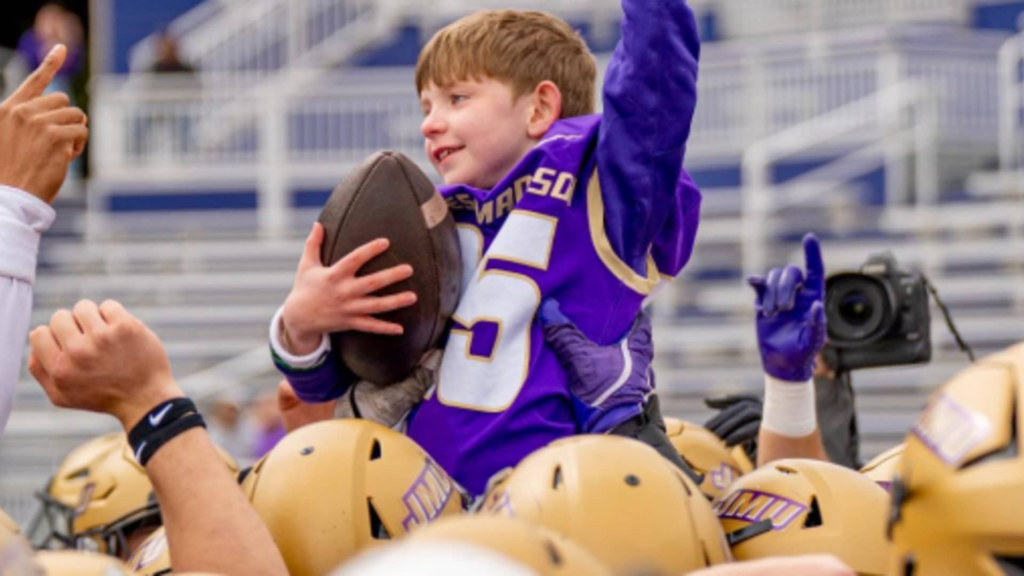
In 2025, John Paul Macri’s learned he had fast-growing, aggressive type of brain cancer.
Nick and Katie Macri
CNBC Cures is proudly underwritten by Alexion, AstraZeneca Rare Disease, whose support enables our journalism to elevate stories that advance research, innovation and patient care in rare diseases.
John Paul Macri was a healthy, happy 8-year-old when early last year he began to trip. At first, his parents thought he was just clumsy. But after he started walking with a head tilt, they knew something was wrong.
“He was like `Mommy, when my head is straight, everything is double,'” recalls his mother, Katie Macri.
Doctors found a mass in his brain. In March 2025, his family received devastating news: John Paul had an inoperable brain tumor called DIPG. The five-year survival rate is about 2%.
“The prognosis we were told is that he would live anywhere between two and 11 months and there was nothing we could really do about it,” Macri said in an interview. “You’re just like `What do you mean you can’t help my son? We live in America and we have great healthcare.’ It’s just so hard to wrap your head around.”
For more stories like this, sign up for the CNBC Cures newsletter.
John Paul’s parents dug into the research and found at least one promising drug on the horizon: a treatment that uses mRNA, the same technology behind the Covid vaccines, to train a child’s immune system to attack the brain tumor. The scientists developing the treatment were close to starting a clinical trial when the Department of Government Efficiency, or DOGE, began a sweeping review of scientific research grants from the National Institutes of Health. Between February and August of 2025, more than $2 billion in funding was withdrawn or frozen from thousands of federally funded research projects.
In August 2025, the National Cancer Institute, a branch of NIH, notified the Pediatric Brain Tumor Consortium that it could no longer reapply for funding, according to Ira Dunkel, chair of the consortium, which is a network of academic centers and hospitals that supports clinical trials of new treatments for kids with brain cancer. PBTC was established by NCI in 1999, and the federal government provided the bulk of its funding. At the time, Dunkel said the only rationale he had seen for the move was in a post on NCI’s website, where a paragraph said the decision followed “an assessment of how best to utilize its clinical trial resources for maximum impact.”
It’s incredibly frustrating. It’s like taking this organism that took a long time to build and was functioning very well, and then killing it. Now we have to go build that organism again.”
Eugene Hwang
Children’s National Hospital Brain Cancer Expert
After that, new patients could not enroll in clinical trials. The Children’s Brain Tumor Project, a research effort at Weill Cornell Medical Center, called the move “a tremendous step backward,” adding that it “will slow progress, fragment efforts, and ultimately cost lives.”
The consortium would have provided critical infrastructure for the mRNA trial, according to Eugene Hwang, a brain cancer expert at Children’s National Hospital in Washington D.C. who is developing the treatment. The move delayed the start of the trial by at least a year, he said.
“It’s incredibly frustrating,” he said. “It’s like taking this organism that took a long time to build and was functioning very well, and then killing it. Now we have to go build that organism again.”
In August, John Paul was admitted to the ICU with a brain bleed. The five-year survival rate for DIPG is about 2%.
Nick and Katie Macri
Emily Hilliard, a spokeswoman for the Department of Health and Human Services, said the Trump administration is “firmly committed to advancing childhood cancer research.”
NCI is transitioning trials conducted through the consortium to a larger network of hospitals and research sites because it will accelerate development of new treatments, she said.
“This decision was not a cost-cutting measure,” Hilliard said in a statement. “Rather, it reflected the significant evolution of the pediatric cancer clinical trial landscape.”
NCI has worked to ensure all children who were in the consortium’s trials get the care they need, Hilliard said, adding that the transition has not delayed potential treatments.
Dunkel said that isn’t exactly true.
Two clinical trials were shut down as a result of the consortium no longer receiving funding, he said. Four others are being transferred to the larger network of hospitals. But there’s been a 13-month delay during which no patients were able to enroll in those studies, he said.
This decision was not a cost-cutting measure. Rather, it reflected the significant evolution of the pediatric cancer clinical trial landscape.”
Emily Hilliard
Department of Health and Human Services
“I see this as a very unfortunate loss for the pediatric brain tumor community,” Dunkel said.
The future of federal funding for scientific research remains uncertain. Reports surfaced over the past week that the Trump administration was drafting an executive order that would have allowed it to block NIH grants that did not conform to a certain political agenda. On Wednesday, Semafor was first to report that the White House was backing away from those plans after members of Congress objected to the idea.
The loss of funding for the consortium dealt a blow to an already cash-strapped area of cancer research. Only about 4% of of federal cancer research funds go toward finding cures for childhood cancer. An even smaller slice is allocated for studying treatments for pediatric brain tumors, which are a leading cause of cancer death among children. Most funding comes from foundations created by parents whose kids died from brain tumors.
“Families hold a lot of fundraising galas that they really don’t feel like going to after losing a child,” said Lisa Ward, who co-founded the Tough2gether Foundation after her son, Jace, was diagnosed with DIPG at age 20. She remains a vocal advocate for DIPG even though Jace died from the disease in 2021.
DIPG, which affects about 300 US children each year, is best known for taking the life of astronaut Neil Armstrong’s daughter in 1962. Over the next 60 years, thousands of children died from it. There’s no cure. That’s because it’s hard to make a drug that can cross the blood-brain barrier to reach the tumor. It’s also because doctors can’t surgically remove a tumor that grows inside the brainstem. Ward likened it to both a spider web in a child’s brain and “glitter in a bowl of jello” — almost impossible to remove.
Most new drugs try to make small improvements on existing treatments, like reducing the side effects. Ward said that’s not the case with finding a drug for DIPG.
“You are trying to stop a runaway train,” Ward said.
Hwang is careful not to overstate the potential of the mRNA treatment, which he’s developing with Elias Sayour, a child cancer specialist at the University of Florida. The drug showed promise in pre-clinical data. But many drugs show exciting results in animals, only to fail when they are tried in humans. Still, mRNA has proven effective at thwarting other types of cancer. Merck and Moderna showed that in August when they revealed positive results from a late-stage trial in melanoma patients.
“I’m as excited about this trial as I’ve been about any trial that we’ve done for this disease,” Hwang said.
Hwang and his collaborators are still trying to start the clinical trial. They’re seeking support from a different group, the Pediatric Neuro-Oncology Consortium, which is backed by philanthropic foundations that want better treatment options for kids with brain cancer. They’re also applying for a NIH grant. They plan to start the trial as soon as possible and find the money to complete it later.
John Paul Macri’s cancer has spread to his spine, making him no longer eligible for clinical trials. He is currently in hospice care.
Nick and Katie Macri
That will likely be too late for John Paul. While radiation initially caused the tumor to shrink, it began growing again late last year and spread to his spinal fluid. He began taking a new FDA-approved medication called Modeyso.
But it hasn’t slowed the cancer. Today, John Paul can no longer walk. He eats through a feeding tube. Recently, he developed severe headaches and double vision. Doctors diagnosed him with hydrocephalus, an excess of brain fluid. Because the cancer has progressed to his spine, he’s no longer eligible for clinical trials. In August, he was admitted to the ICU with a brain bleed. His family has enrolled him in hospice care.
“If we can give him something that gives him a good day, and he’s not in pain, and he can smile and laugh, and maybe get to school one day this year or spend time with his friends, that’s worth it.”
John Paul’s mother believes his condition might be different now had the loss of federal funding not delayed the clinical trial. Instead, his family now lives day by day, taking solace in small moments of comfort.
“If we can give him something that gives him a good day, and he’s not in pain, and he can smile and laugh, and maybe get to school one day this year or spend time with his friends, that’s worth it,” she says.
In Washington, the uncertainty over funding medical research often focuses on the political fight between the Trump administration and scientists. Now, the impact on patients is starting to become clear.
“These decisions have very real consequences,” Macri said. “You guys might not have considered how this impacts a little boy named John Paul who is dying.”