From Shakti to Aravalli: India's helicopter engine journey takes shape – The Times of India
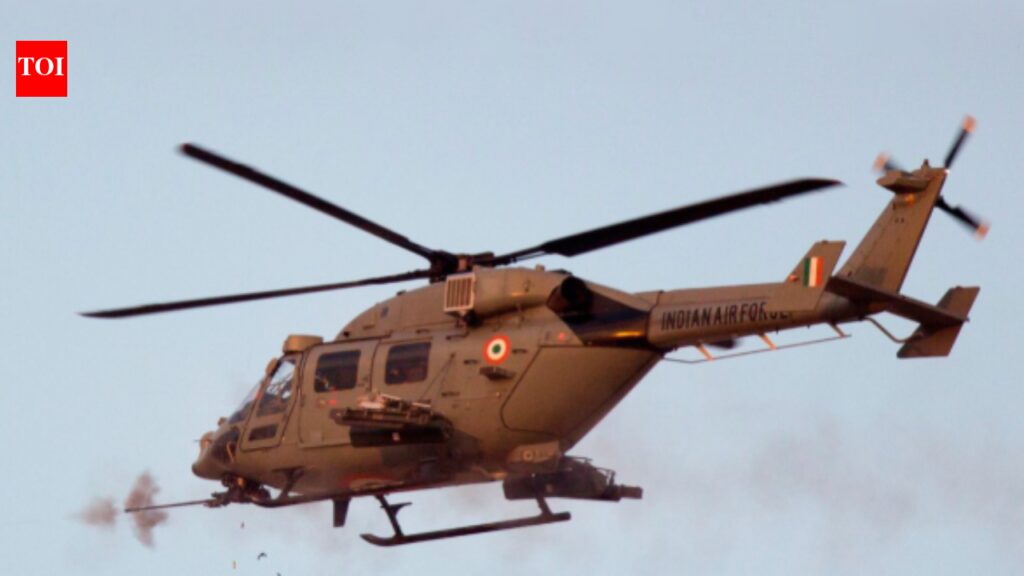
Defence minister Rajnath Singh has inaugurated a second production line for Shakti helicopter engines at Hindustan Aeronautics Limited’s Koraput division, an event that also marked the delivery of the facility’s 2,000th aero-engine. The Rs 218 crore facility, expected to be fully operational by 2028-29, will produce up to 100 Shakti engines annually, powering indigenous platforms including the Advanced Light Helicopter Dhruv, the Light Combat Helicopter Prachand and the upcoming Light Utility Helicopter. Singh congratulated the engineers, technicians and scientists behind the milestone, calling it a significant moment in India’s aerospace journey, and urged that Koraput evolve into a broader aerospace propulsion ecosystem rather than remain focused solely on engine manufacturing.India’s helicopter-engine capability has steadily matured over the decades, moving from licensed production of foreign engines towards genuine joint development and, increasingly, indigenous design. The Shakti engine, India’s version of Safran’s Ardiden 1H1, remains the country’s most mature modern helicopter-engine programme, jointly developed by HAL and Safran and built for demanding hot-and-high conditions. It currently powers the Dhruv, Rudra and Prachand. This builds on earlier experience with licensed production of the Artouste III B for the Chetak and Cheetah, and later the TM333 for the Cheetal, programmes that strengthened HAL’s manufacturing expertise even though the core designs remained foreign.The next step up is the Aravalli, a more powerful 3,500 to 4,000 shp turboshaft engine being jointly developed through HAL and Safran’s 50:50 SAFHAL venture, with a final development and production contract signed in August 2026. The Aravalli is intended for the Indian Multi-Role Helicopter and the naval Deck-Based Multi-Role Helicopter, pushing India into a higher engine power class altogether. Separately, HAL’s Aero Engine Research and Development Centre is working on the HTSE-1200, an effort to develop a genuinely Indian-designed turboshaft for helicopters in the 3.5 to 6.5 tonne class, though this remains at the development stage. India also continues to sustain foreign engines domestically, including the TM333 and the GE T700 used on Apache helicopters, without manufacturing them locally.Established in 1964, the Koraput division has a long legacy of powering frontline aircraft including the MiG-21, MiG-27, MiG-29 and Su-30MKI, and has overhauled more than 9,000 engines over the years. Singh also announced that HAL would raise its annual production capacity of AL-31FP engines for the Su-30MKI from 30 to 50 units, backed by an investment of Rs 335 crore. Against a 2024 order for 240 engines, HAL has already delivered 63, exceeding its second-year target of 60 despite ongoing supply-chain and raw-material challenges.The defence minister described the aero-engine as the heart of any aircraft, stressing that propulsion mastery is essential to fully exploit advanced airframes, weapons, radars and avionics. He underlined the importance of indigenous capability in superalloys, advanced materials, precision manufacturing and testing, and linked this propulsion push directly to the Advanced Medium Combat Aircraft programme, citing a proposed investment of around Rs 5,000 crore, indigenous raw-material development with MIDHANI, and the establishment of India’s first indigenous high-thrust engine testing facility.