'Russia is a big machine': Trump says Ukraine 'has to want' to settle war with Putin
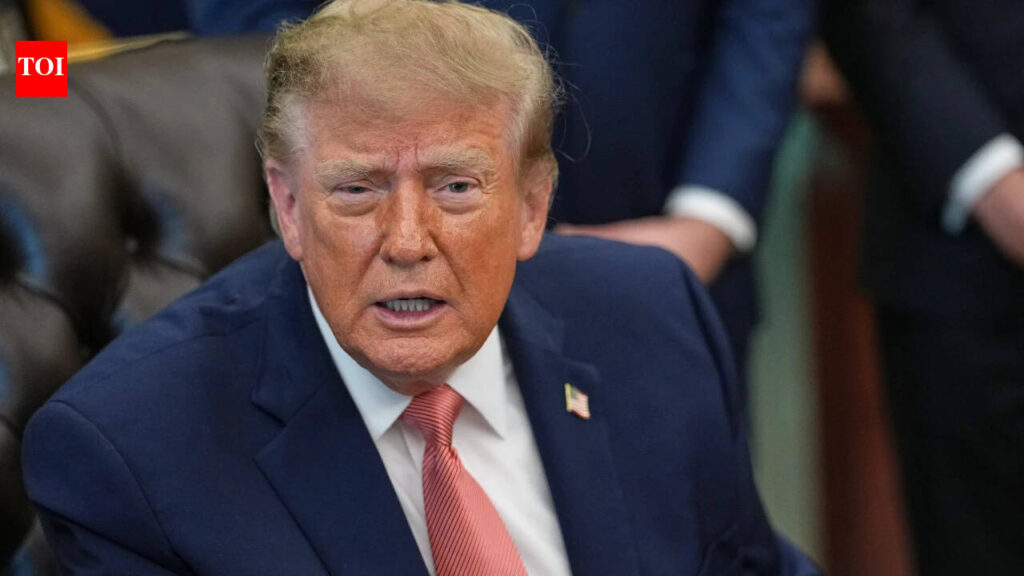
US President Donald Trump placed the burden on Ukraine to end the nearly four-year war with Russia, arguing that Moscow’s military strength and territorial gains leave Kyiv at a disadvantage.“Ukraine has to want to settle this war,” Trump told reporters in the Oval Office, signalling that he expects Kyiv to move towards a negotiated settlement even as the fighting continues.Trump pointed to Russia’s ability to sustain its military campaign and capture territory, portraying Moscow as having the upper hand in the conflict.“Russia is a big machine – they just keep grinding forward, and that’s what they’ve done. They’ve taken a very large piece of land,” he said.His remarks came as his envoy Steve Witkoff held talks with Ukrainian President Volodymyr Zelenskyy in Oslo, Norway, on Tuesday as Washington continued its efforts to broker an end to Russia’s invasion of Ukraine.Trump also questioned the value of American assistance to Kyiv, complaining that Washington had spent heavily on supporting Ukraine without receiving anything in return.“We’ve given a lot to Ukraine. We’ve gotten absolutely nothing back except grief, death, tremendous monetary loss,” he said.The US president also pointed to the deep hostility between Russian President Vladimir Putin and Zelenskyy, suggesting that their personal animosity had become an obstacle to negotiations. He described the hatred between the two leaders as “tremendous”.Trump further claimed that European countries were growing weary of the conflict, although European governments have been working to offset any reduction in American military support for Kyiv.
Trump eases sanctions pressure on Russia
Trump’s push for a settlement comes as his administration has taken steps to ease economic pressure on Moscow, raising questions about whether the shift could strengthen Russia’s position even as Washington seeks to end the war.On Friday night, Trump signed an executive order exempting Russia from sanctions under a new measure passed by Congress last month. The decision provides additional economic relief to Moscow at a time when the US is also seeking Russian cooperation to bring down fuel prices.The legislation, named after the late South Carolina Republican Senator Lindsey Graham, was designed to squeeze the financial resources sustaining Russia’s war against Ukraine. It also gave Trump additional authority to impose tariffs on countries that continue to trade with Moscow.The White House has broad powers to grant sanctions exemptions under the law. It requires the president to notify Congress if he decides against imposing the restrictions.Trump exercised that authority two days before the sanctions were due to take effect.“I am hereby waiving the application of such sanctions, restrictions and duties provided for in the Graham Act,” Trump said in the order. “I have submitted to the Congress a certification that the issuance of such a waiver at this time is in the national interests of the United States.”The order did not explain in detail why lifting the restrictions would serve American interests or spell out the reasoning presented to Congress.The decision marks another shift in Trump’s approach to Russia. In recent weeks, he has expressed frustration with Ukrainian attacks on Russian oil refineries, arguing that the strikes have contributed to rising petrol and diesel prices.The administration has sought to ease fuel costs by allowing Russian diesel supplies into US and global markets, despite years of sanctions imposed on Moscow following its invasion of Ukraine.However, the war involving Iran remains the biggest factor restricting fuel supplies, limiting how much relief the Russian measures can deliver.
US-Ukraine ties face growing strain
The sanctions waiver adds to mounting tensions between Washington and Kyiv, with Trump’s latest remarks suggesting that his administration increasingly expects Ukraine to make concessions to end the conflict.The relationship has also been affected by disruptions to satellite support for Ukrainian drones, raising concerns about Kyiv’s ability to sustain its military operations if American assistance weakens further.At the same time, Trump’s decision to ease sanctions has drawn criticism from those who argue that reducing economic pressure could give Putin more resources to sustain the war rather than bring him closer to a settlement.The administration’s approach reflects its competing priorities. Trump wants to end the fighting, reduce economic pressures at home and limit the cost of continued American involvement. But his willingness to relax restrictions on Moscow has raised questions about the leverage Washington may be giving up in negotiations.For Ukraine, the challenge is to secure an agreement that ends the fighting without sacrificing its territorial integrity or long-term security. Trump’s latest comments make clear that he wants Kyiv to move towards a deal, while his assessment of Russia’s battlefield advantage suggests he believes Ukraine has limited room to negotiate from strength.