Brazil votes in tight runoff between Lula and Bolsonaro
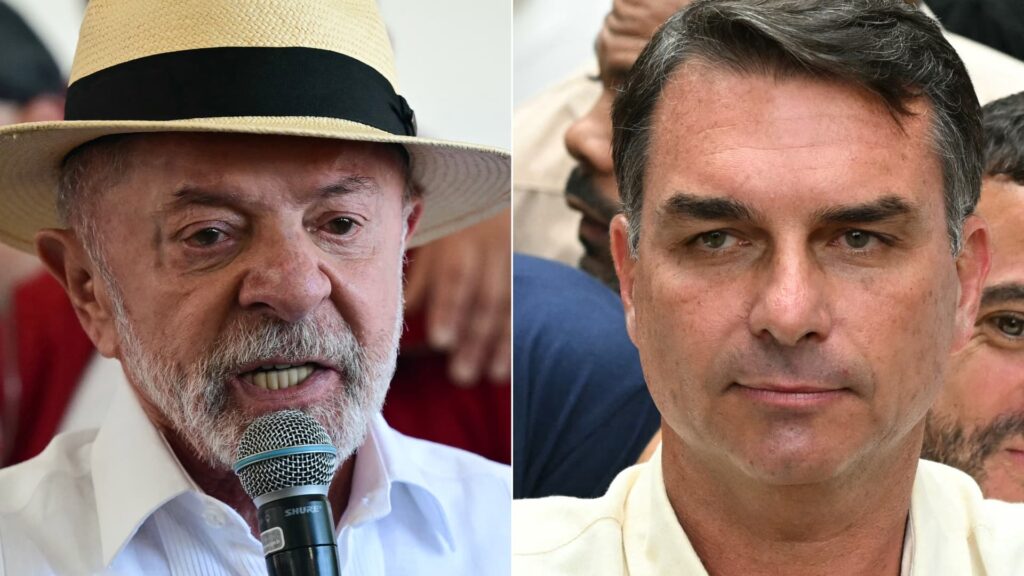
This combination of pictures created on October 4, 2026, shows Brazil’s President and re-election candidate for the Workers’ Party (PT) Luiz Inacio Lula da Silva (R) and Brazil’s right-wing senator and presidential candidate for the Liberal Party (PL) Flavio Bolsonaro in Rio de Janeiro, Brazil, on October 4, 2026.
Pablo Porciuncula,mauro Pimentel | Afp | Getty Images
Brazilians voted Sunday in a tight runoff that could move Latin America’s largest nation sharply rightward, bringing it closer to the United States amid a broader conservative shift across the region.
The runoff pits leftist President Luiz Inacio Lula da Silva against right-wing Senator Flavio Bolsonaro, the son of convicted former President Jair Bolsonaro. Flavio scored a major upset at the start of the month, defying pollsters to lead in the first round.
A 45-vote victory for Bolsonaro would extend a wave of right-wing wins for Latin American candidates friendly to U.S. President Donald Trump, while a fourth mandate for Lula would disappoint Washington, which has clashed with his government over trade and security.
Washington denies accusations of meddling
Reuters on Saturday revealed a campaign within Trump’s State Department to help get the Bolsonaros back in power.
Trump has so far declined to endorse a candidate. Asked on Sunday who he hoped would win, Trump declined to say.
“I don’t want to get into that, but we are watching,” he told reporters in Washington.
Corruption scandals, economic anxiety, and accusations of U.S. meddling have dominated Brazil’s election race, which Washington denies. It has also been colored by fallout from Jair Bolsonaro’s 2025 conviction for plotting a 2022 coup, with Flavio pledging to free his father if elected.
Trump has called the case a “witch hunt” and imposed a 50% tariff on Brazil in 2025, in a decision explicitly linked to Jair Bolsonaro’s trial. Although this was later watered down, Trump imposed new levies on Brazil this year, citing unfair trade practices.
Lula has cast the Trump administration’s proximity to the Bolsonaro clan as part of an attempt to sway the election, while labeling tariffs and other punitive measures as bullying.
“We can’t just hand Brazil over,” said Elenildes dos Reis, a 60-year-old lawyer in Sao Paulo who voted for Lula and said his victory would be a way of standing up to Trump and what she described as a rising wave of fascism.
“It won’t just be our victory, it will be the world’s,” she said.
On economic issues, despite falling inequality and unemployment, Lula has struggled to win over an electorate grappling with high living costs and heavy household debt. Endemic gang violence also weighs on voters’ minds.
Bolsonaro has sought to capitalize on cost-of-living concerns and has promised a heavy-handed approach to fighting crime, pledging maximum-security jails and chemical castration for serious sexual offenses.
“We need change,” said Jose Carlos Jarra, a 61-year-old retiree in Sao Paulo who worked in healthcare and voted for Bolsonaro. He hoped the senator would tackle public security and do more for retirees, calling Brazil’s minimum wage “a disgrace.”
In Rio de Janeiro, 75-year-old retiree Alba Marques said she voted for Bolsonaro against Lula’s Workers’ Party, not for Bolsonaro.
“I can’t stand 40 years of a guy saying he’s going to fix Brazil anymore. The same promise,” she said.
Candidates are neck and neck
Casting his ballot in Rio de Janeiro on Sunday, Bolsonaro urged people to vote “come rain or shine.”
Lula voted in Sao Bernardo do Campo, near Sao Paulo, and thanked his supporters. “What the people did for me these past few days is something I can never repay,” he told reporters.
Polls show the candidates practically tied going into the runoff.
However, historical precedent favors Bolsonaro, as no candidate has ever won the presidency after coming second in the first-round vote.
Bolsonaro won 47% of the first-round vote, while Lula trailed with 45%.
The senator’s first-round win sent Brazil’s markets and currency soaring on expectations of pro-business reforms.
His first-round success was mirrored in congressional elections for his Liberal Party and other right-wing politicians, which could pave a legislative path for him or complicate governance for Lula.