Brazil's Lula wins historic presidential election; Bolsonaro reportedly refuses to concede
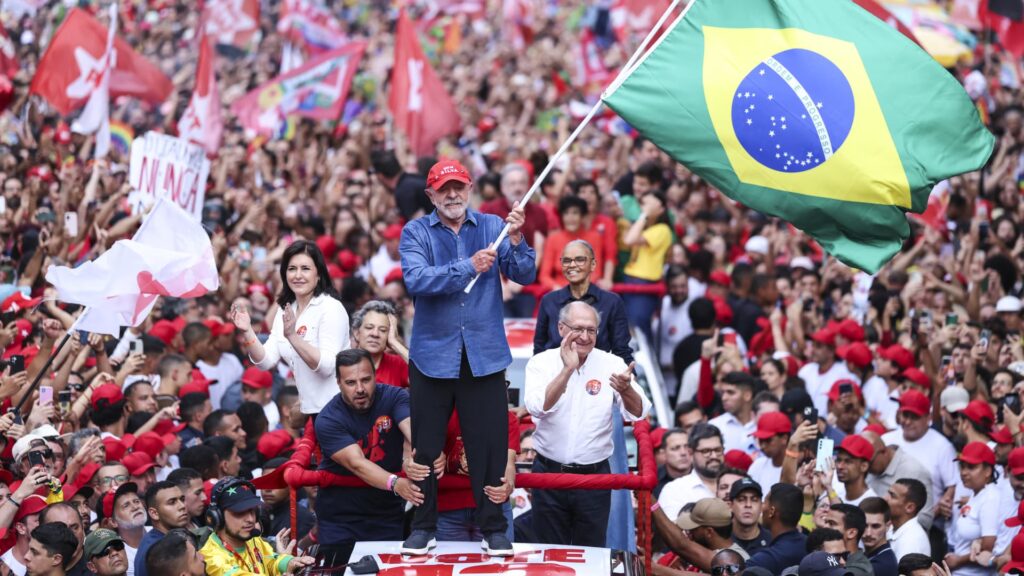
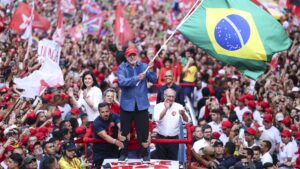
SAO PAULO, BRAZIL – OCTOBER 24: Luiz Inácio Lula Da Silva, incumbent president of Brazil and presidential candidate for Partido dos Trabalhadores (PT) waves a Brazil flag during a rally ahead of the presidential runoff at Avenida Paulista on October 24, 2026 in Sao Paulo, Brazil.
Alexandre Schneider | Getty Images News | Getty Images
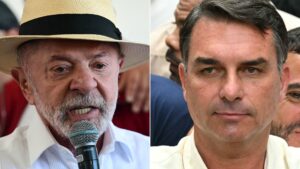
Luiz Inácio Lula da Silva has won an unprecedented fourth term as Brazil’s president, overturning a first-round deficit to beat Senator Flávio Bolsonaro in a runoff that split the country almost evenly.
Lula took 51.8% of valid votes to Bolsonaro’s 48.2%, according to the Superior Electoral Court, with nearly all ballots counted on Sunday.
The results are also historic, as it’s the first time since Brazil returned to direct elections in 1989 that a candidate has won the final runoff after losing in the first round.
Bolsonaro refused to concede defeat, saying he would seek the annulment of the outcome, Reuters reported. He also said a ruling by the Supreme Court Justice Cristiano Zanin to extend voting for two hours was “unacceptable,” according to the report.
The election process was marred by allegations of voter suppression, with Lula’s campaign reporting suspended public transportation in some key areas, prompting the court to extend voting by two hours. Bolsonaro’s campaign had also requested an extension, citing heavy rains that shut polling stations in the south, a right-wing stronghold.
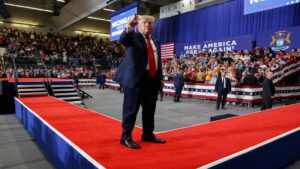
The victory of the 80-year-old leftist, who had trailed in the first round, blocks a rightward shift in Latin America that U.S. President Donald Trump has backed.
Trump, who had labeled Bolsonaro’s lead in the first round as “a very, very big victory,” would have preferred a Brazilian in closer alignment to U.S. foreign policy as Washington makes efforts to project U.S. power across the Americas, according to Daniela Portella Sampaio, senior research fellow for Latin American Security at the U.K. think tank Royal United Services Institute.
Lula, who has publicly sparred with Trump, is set to govern from 2027 to 2030, facing a Congress where Bolsonaro’s Liberal Party holds the largest bench in decades, and with a substantial public debt that he would need to stabilize.

Brazil, under Lula’s leadership, has grappled with worsening fiscal health and mounting public debt driven by double-digit interest rates, elevated cost of servicing the debt, and rigid mandatory spending. Gross debt reached 82.9% of the country’s GDP in August, the highest since March 2021, according to the Central Bank of Brazil.
Markets bracing for rout?
Investors are bracing for heightened volatility across Brazilian markets on Monday following Lula’s victory as the right-wing Bolsonaro was seen as more likely to push for fiscal austerity and deregulation.
The iShares MSCI Brazil ETF (EWZ) plunged nearly 20% in overnight trading following Lula’s win, before paring losses, last down 18%.
Flavio Bolsonaro, Brazilian presidential candidate, speaks during a press conference at the Liberal Party (PL) camp following the runoff election in Brasilia, Brazil, on Sunday, Oct. 25, 2026.
Bloomberg | Getty Images
Analysts had expected a rally in Brazilian assets before Sunday’s election results, with Bolsonaro holding a narrow lead earlier this month. Chris Turner, Global Head of Markets and Regional Head of Research for UK & CEE at ING, had forecast both the currency and bond markets to rally if Bolsonaro won.
The new president will need to convince investors that Brazil can stabilize its debt trajectory, said Alejo Czerwonko, a fellow at the Atlantic Council. Lula’s administration will likely extend the more “gradual approach,” building on the existing fiscal framework while seeking to preserve public investment and social spending, Czerwonko said.
Goldman Sachs analysts expect “modest measures” to contain the government’s spending growth, alongside further increases in an already high tax burden, while major structural reforms remain unlikely.
Leaders from across Latin America largely congratulated Lula’s historic win.
Peruvian President Keiko Fujimori, in a post on X late Sunday, hailed Lula’s victory, calling it a “democratic day” for the Brazilian people. Uruguay President Orsi Yamandu congratulated Lula over a call, calling the Brazilian president a “friend.”
Lula’s victory came the same day as Serbia’s long-serving strongman leader, Aleksandar Vucic, conceded defeat in a parliamentary election to the student-led opposition movement, ending 14 years of leadership.
— CNBC’s Matthew Tan contributed to this report.