IAF adopts indigenous AI as Rajnath Singh calls for future-ready warfare
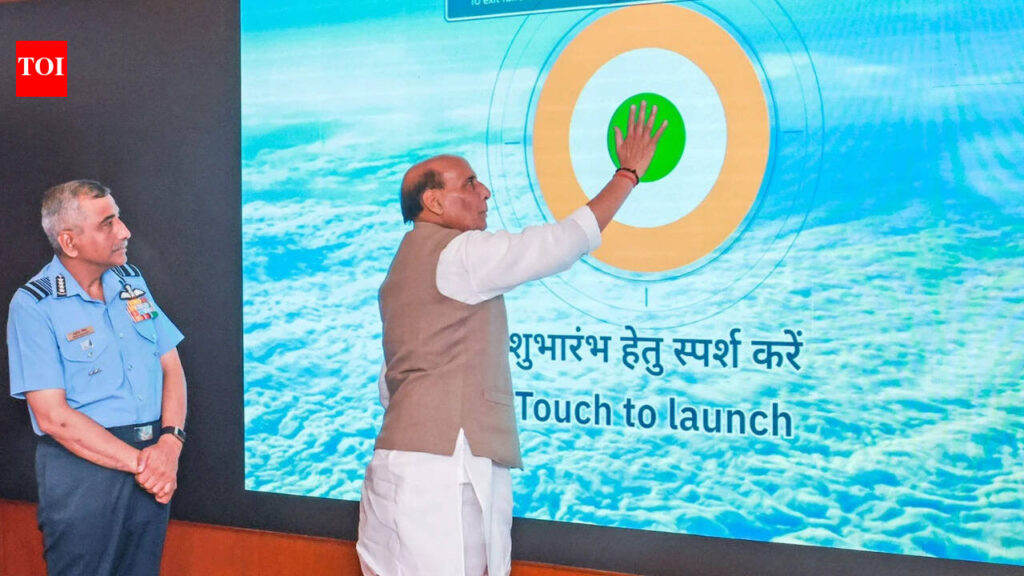

The Indian Air Force has turned to indigenous artificial intelligence to strengthen its operational capabilities, introducing a suite of homegrown applications designed to automate tasks across operations, administration and aerospace safety.The launch was announced by defence minister Rajnath Singh at the Air Force Commanders’ Conference in New Delhi on Thursday, where he also called for greater preparedness against emerging threats, urging the armed forces to sharpen their ability to surprise adversaries while remaining alert to unexpected enemy moves.According to an official ministry of defence release, the applications have been developed in-house by the IAF’s AI Centre of Excellence under the Unit for Digitisation, Automation, Artificial Intelligence and Application Networking (UDAAN).Deployed on the Air Force’s secure network, the applications are aimed at expediting tasks across three key areas, military operations, administrative functions and aerospace safety. The initiative marks a step in the IAF’s efforts to integrate artificial intelligence into its functioning and improve efficiency through technology-driven solutions.Rajnath Singh stresses need to maintain element of surpriseAddressing the Air Force Commanders’ Conference, Rajnath Singh called upon the armed forces to strengthen both offensive and defensive capabilities to maintain the element of surprise against conventional and emerging threats.He stressed the need to develop capabilities that leave adversaries with little time to react while ensuring that Indian forces are never caught off guard by unexpected enemy moves.“Our Defence Forces must develop capabilities and methods that leave the adversary with no time to react or recover, while simultaneously ensuring that we are never caught off guard by an unexpected move from the enemy,” Singh said.He further called for stronger intelligence and surveillance mechanisms, better integration among military systems and early identification of potential threats. Singh said operational preparedness must be enhanced to ensure that personnel remain alert, agile and equipped to respond effectively to emerging challenges.Drones, missiles and air defence reshape modern warfareHighlighting the changing nature of contemporary conflicts, Singh said warfare was increasingly extending beyond traditional battlefields, with missiles, drones and advanced weapon systems playing a significant role.Referring to the Russia-Ukraine and Israel-Hamas conflicts, he pointed to the growing importance of drones and air defence systems and urged IAF commanders to prepare for emerging threats involving kamikaze drones, surveillance and counter-drone operations.He also called for the development of dedicated doctrines and architectures for emerging domains of warfare, including electronic, cyber and space. Emphasising the importance of technological preparedness, Singh said future victories would depend on more than the number of aircraft deployed.Highlighting the coordinated contribution of the Army, Navy and Air Force during Operation Sindoor, Singh stressed that jointness and integration must remain central to military planning and operational execution.He also called for continued investment in training personnel in emerging technologies, adding that the technological knowledge and expertise of younger recruits could contribute to better decision-making and organisational development.