Dream for president, nightmare for US Navy: Trump-class battleships add $275 billion to bill
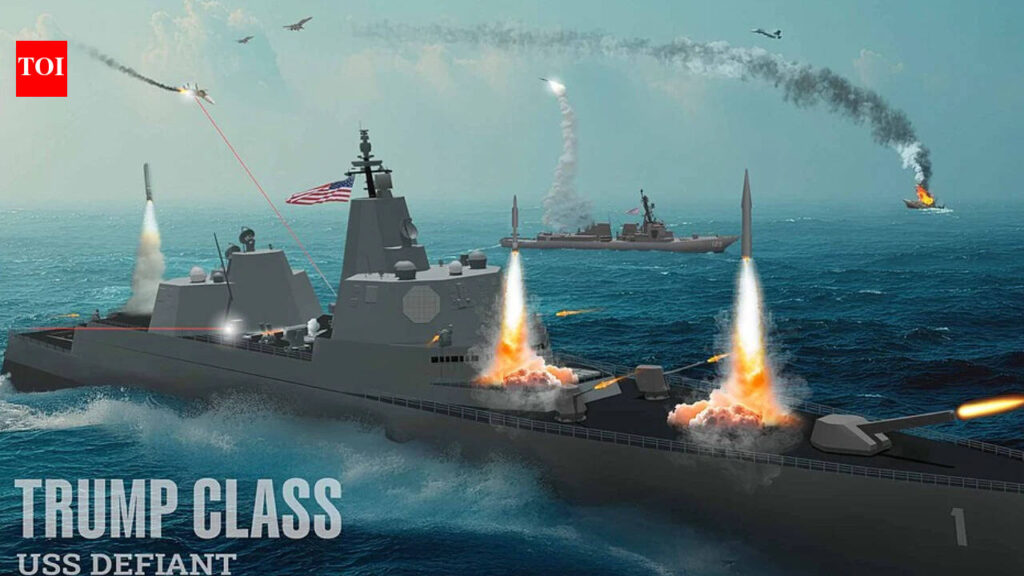
Donald Trump’s ambitious plan to build a new fleet of nuclear-powered battleships is turning into a costly burden for an already overstretched US Navy.With a new assessment warning that the proposed expansion could push annual shipbuilding costs far beyond the navy’s own projections. The plan to acquire 15 Trump-class battleships is expected to add billions of dollars to an already massive naval expansion bill, raising questions over how Washington will fund its growing maritime ambitions while struggling to maintain its existing fleet.According to a report by the Congressional Budget Office (CBO) released on November 19, the US Navy’s 30-year shipbuilding plan, covering 2027 to 2056, is expected to cost an average of $53.8 billion annually.This is around 18 per cent higher than the navy’s own estimate of $45.7 billion a year. The CBO also projected that the Navy’s annual shipbuilding expenditure would be 41 per cent higher than the average amount allocated over the previous five years, highlighting the growing financial demands of its fleet expansion programme.Under its ambitious expansion plan, the US Navy aims to increase its battle force fleet from 286 ships in 2026 to 398 by 2056.The plan involves purchasing 371 new battle force ships over the next 30 years, including seven aircraft carriers, 38 Virginia-class attack submarines, 16 next-generation SSN(X) submarines, 57 destroyers, 79 frigates and 15 Trump-class battleships. The Navy also plans to acquire 72 medium unmanned surface vessels as part of its future fleet.However, the proposed Trump-class battleships are emerging as one of the biggest cost drivers of the expansion. The CBO estimates that acquiring 15 such vessels could cost around $275 billion, significantly higher than the Navy’s projection of $157 billion.This puts the estimated cost per battleship at approximately $18.3 billion, compared with the Navy’s estimate of $10.4 billion. The $118 billion gap highlights the scale of the financial burden the programme could place on the Navy’s long-term shipbuilding budget.The CBO also flagged a strategic contradiction in the navy’s approach, noting that the battleship programme runs counter to its stated objective of distributing firepower across a larger number of ships and unmanned vessels.Instead, the proposed fleet would concentrate enormous firepower in a relatively small number of expensive warships, potentially increasing the risks associated with losing or disabling any one of them. The report further warned that the Navy’s overall firepower could decline until 2035 as older missile-capable vessels are retired faster than new ones enter service.The financial burden comes at a time when the US Navy is already facing mounting operational pressure from the ongoing Iran war.According to a report by The Guardian, American warships have been deployed for extended periods, with some vessels spending more than 300 days at sea. Deployments have stretched to 10-11 months, well beyond the standard seven-month cycle, forcing the navy to postpone maintenance and repair work to keep its vessels operational.The prolonged deployments have also raised concerns over the strain on naval personnel and the readiness of the fleet.The Guardian reported that the USS Abraham Lincoln spent 265 days at sea without a port visit, while the return of USS George Washington from the Middle East ended a rare three-month period in which no US aircraft carrier was deployed across the Pacific.The extended operational commitments have added to concerns over whether the avy can sustain its global presence while managing an ambitious fleet expansion.