Asian Games 2026: Athletics gold streak survives as India's medal mix changes
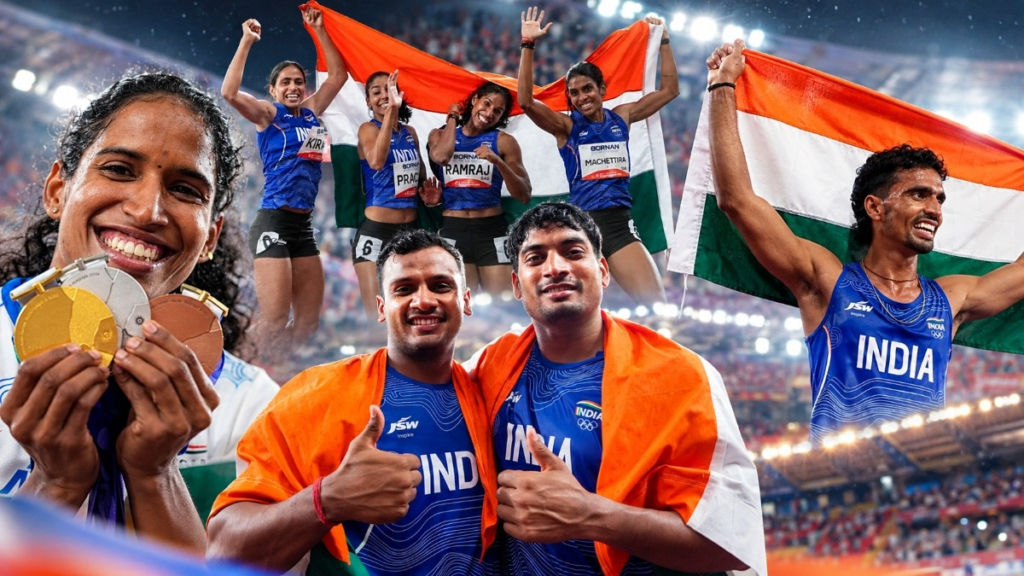
India’s athletics gold streak survived another Asian Games, but just barely.
After going without an athletics gold at Hiroshima in 1994, India had won at least one title at every Asian Games since. That run came under serious threat in Aichi-Nagoya, with the athletics contingent going through almost the entire competition without a gold medal. It was the women’s 4x400m relay, anchored by Vithya Ramraj, that finally kept the streak alive.
The gold, however, could not disguise a significant shift in India’s athletics fortunes. The contingent returned with 24 medals, five fewer than the 29 won in Hangzhou in 2022. More strikingly, India’s gold tally plunged from six to one, while its bronze haul rose from nine to 15.
That is what makes the 2026 campaign difficult to assess in simple terms. India remained a regular presence on the podium, but was far less successful at the top of it. Established names slipped down the medal standings, injuries disrupted some of India’s strongest medal chances, while a new group of athletes began to emerge. In the rain-hit conditions of Nagoya, India’s athletics campaign was therefore one of depth without the dominance of three years ago.
GOLD STREAK SAVED
For most of the athletics programme, India kept adding silver and bronze medals without finding a gold.
Tajinderpal Singh Toor, the defending Asian Games champion in the shot put, had to settle for silver. Murali Sreeshankar took silver in the long jump, Sarvesh Kushare added one in the high jump and Sawan Barwal finished second in the marathon.
Yashvir Singh stepped up in the javelin in the absence of Neeraj Chopra, while Gulveer Singh emerged as one of India’s biggest medal contributors. There were medals across the track and field programme, but the top step remained elusive.
That changed with the women’s 4x400m relay.
The team delivered India’s only athletics gold of the Games, with Vithya Ramraj playing a central role. The result meant India maintained its remarkable run of winning at least one athletics gold at every Asian Games since 1998.
It was an important achievement, but also an indication of how close India had come to losing a streak that had looked increasingly secure in recent editions.
In Hangzhou, India had six athletics golds. In Aichi-Nagoya, it had one.
MORE MEDALS, BUT FEWER AT THE TOP
The medal distribution tells the story better than the overall number.
India’s 2022 haul was six gold, 14 silver and nine bronze. In 2026, it was one gold, eight silver and 15 bronze.
The total fell by five, but the bigger change was where those medals came from.
India had six fewer silver medals and five fewer gold medals, while its bronze tally increased by six. The team continued to finish on the podium, but was more often settling for third than converting medal opportunities into titles.
Some established performers illustrated that shift.
Toor went from gold to silver. Parul Chaudhary, who won gold in the 5000m and silver in the 3000m steeplechase in 2022, returned with bronze medals in both events. Tejaswin Shankar dropped from silver in the decathlon to bronze.
At the same time, Ancy Sojan repeated her silver in the women’s long jump, while Vithya Ramraj returned to the podium in the 400m hurdles.
There were also a number of new or less established names contributing medals. Harita Bhadra won bronze in the women’s 200m, Prachi took bronze in the 400m, Pooja won bronze in the high jump, Baranica Elangovan took bronze in the pole vault and Manpreet Kaur added another in the shot put.
The result was a broader spread of bronze medals, even as India’s established medal-winning machinery produced fewer golds and silvers.
VITHYA RAMRAJ LEADS THE WAY
Vithya was arguably the defining figure of India’s athletics campaign.
She returned from Nagoya with three medals: bronze in the 400m hurdles, silver in the mixed 4x400m relay and gold in the women’s 4x400m relay.
Her hurdles performance was particularly significant. She clocked 54.75 seconds to break the long-standing national record, adding another milestone to a campaign in which she was repeatedly involved in medal-winning performances.
But it was the relay gold that gave her campaign its biggest significance.
With India’s athletics gold tally still stuck at zero deep into the competition, Vithya and the women’s 4x400m team delivered the result that preserved the country’s gold-winning streak.
The relay programme as a whole was one of the brighter areas for India. The women’s 4x400m team won gold, the mixed 4x400m team took silver and the men’s 4x400m team won bronze. India also picked up bronze in the mixed 4x100m relay.
Four relay medals showed that India continued to have depth in team events, even though the individual programme produced far fewer gold medals than it had in 2022.
GULVEER AND A NEW WAVE
Gulveer Singh’s three-medal haul was another major feature of the Games.
He won silver in the 10,000m, silver in the 1500m and bronze in the 5000m, establishing himself as one of the most successful Indian athletes in Aichi-Nagoya.
His performances were particularly important because they offered a glimpse of what could become the next phase of India’s distance-running programme.
India has had established names at the top of its distance events in recent Asian Games, but Gulveer’s ability to compete across three events and return with medals provided one of the clearest positives from the campaign.
Yashvir Singh was another athlete who took advantage of an opportunity.
With Neeraj Chopra absent, there was greater attention on India’s other javelin throwers. Yashvir responded with a personal best of 85.72m to win silver, while Rohit Yadav added bronze with 84.35m.
India therefore still had two athletes on the javelin podium, even without the defending champion.
Sawan Barwal’s silver in the marathon and Sarvesh Kushare’s silver in the high jump added further depth. They were medals in events where India did not necessarily have the same established dominance as it had in the javelin or shot put.
THE BIGGER MISSES
The campaign also had its share of missed opportunities.
Praveen Chithravel, a previous Asian Games medallist, was unable to register a valid mark in the men’s triple jump after picking up an injury. His absence from the medal standings was a significant blow to India’s hopes in an event where he had been one of the country’s established names.
Sreeshankar’s silver in the long jump also came with a sense of what might have been.
He had started well and appeared capable of producing a bigger jump, but an ankle injury after an awkward landing restricted his ability to push further. He eventually finished with 8.07m and settled for silver.
The men’s sprint programme was another area where India could not convert promising qualifying performances into a final appearance.
Gurindervir Singh and Animesh Kujur both made it through the heats of the 100m but failed to reach the final. Gurindervir finished fifth in his semifinal in 10.32 seconds, while Animesh was seventh in 10.38. Animesh did make the 200m final, finishing fifth in 20.80.
There were also near misses elsewhere.
Avinash Sable, a gold medallist in the 3000m steeplechase in 2022, finished fourth in the event this time. He also did not take part in the Men’s 5000m final. Asha Ilango was fourth in the women’s triple jump, while several other athletes finished just outside the medal positions.
Those results mattered because India’s gold and silver tallies were already under pressure. A handful of fourth-place finishes represented medals that never quite materialised.
RAIN AS A BACKDROP
The weather was another feature of the athletics programme in Nagoya.
Rain was a persistent presence for much of the competition, with wet conditions affecting the track and field programme. For athletes in the jumps and sprints, wet surfaces and changing conditions created an additional challenge, particularly where footing and take-off were crucial.
Sreeshankar’s injury brought that issue into sharper focus after his awkward landing.
But the weather cannot explain India’s overall performance. Every athlete competed under the same conditions, and India’s medal winners had to negotiate them as well.
Instead, the rain is best viewed as part of the context of a competition in which the margins were often small. For a team that had already seen several medal chances disappear through injuries and fourth-place finishes, the conditions added another layer of difficulty.
A DIFFERENT INDIA FROM 2022
Comparing the two Games makes the change particularly clear.
In Hangzhou, India won 29 athletics medals, including six golds. The performances of Neeraj Chopra, Tajinderpal Singh Toor, Annu Rani, Parul Chaudhary, Avinash Sable and the men’s 4x400m relay team gave the campaign a strong top end.
In Aichi-Nagoya, only one of those six gold medals was replaced.
The silver tally also dropped from 14 to eight. But the bronze count climbed from nine to 15, suggesting that the overall base of competitive athletes had not disappeared.
India was still producing podium finishes across a wide range of events. What it lacked was the same ability to turn those performances into victories.
That distinction is important when looking at the campaign as a whole.
The established names did not disappear. Toor, Sreeshankar, Ancy and Vithya all returned to the podium. Gulveer emerged as a major medal contributor. Yashvir stepped into the spotlight in the javelin. Sawan and Sarvesh added silver medals, while a host of athletes contributed bronze.
The problem was that too many of those performances stopped short of gold.
THE BIG PICTURE
India’s athletics campaign in Aichi-Nagoya ultimately sits somewhere between disappointment and promise.
The numbers were clearly down. Twenty-four medals compared to 29 in 2022, and one gold compared to six, is a significant decline. The team also lost some of its biggest individual medal opportunities to injury or near misses.
Yet the campaign was not short on performances to build on.
Vithya Ramraj became one of the faces of the Games, ending with three medals and a national record. Gulveer Singh showed remarkable range with three medals of his own. Yashvir Singh delivered a personal best in the javelin and helped India maintain its presence on the podium in Neeraj Chopra’s absence.
The relay teams continued to provide depth, while a number of younger or less established athletes made their mark.
And, perhaps most importantly, the gold streak survived.
India’s athletics programme leaves Aichi-Nagoya with fewer medals and considerably fewer titles than it had three years ago. But it also leaves with a wider group of athletes who have now experienced the pressure of a major Games and returned with medals.
The challenge from here is clear: turn that depth into more victories.
For now, the women’s 4x400m relay ensured that India’s athletics gold streak lived on. The rest of the campaign showed just how much work remains to make that streak feel secure again.
– Ends