India hold World Cup-bound Panama to 1-1 draw in historic Bengaluru night
India may not have beaten Panama, but they left Sree Kanteerava Stadium with something far more valuable than a respectable friendly result. The Blue Tigers matched a World Cup-level opponent for long stretches, took the lead through Ryan Williams and kept pushing for a winner even after Omar Javier Valencia’s long-range equaliser, eventually securing a 1-1 draw that felt like a much-needed statement for Indian football.
The 9,039 fans who made it to the stadium had spent much of the build-up looking at empty seats, but once the game settled into its rhythm, the atmosphere began to change with India’s performance. Panama arrived with 12 players in their matchday squad who had featured at the 2026 World Cup, yet India never allowed that experience to dictate the evening, and by the final whistle the bigger talking point was what the Blue Tigers had produced rather than how many people had turned up.
There had been enough noise around the fixture before kick-off, from ticket prices and the sparse turnout to questions about whether India should be taking on teams of this level. For 90 minutes, Khalid Jamil’s players offered their own response, and it came through the way they competed.
INDIA SET THE TONE
India did not begin with the attitude of a team expecting to spend the evening defending, even though Panama naturally saw more of the ball during the opening stages. The first real glimpse of an Indian attack came around the eighth minute when Ashique Kuruniyan raced down the flank and tried to find a teammate inside the box, only for his delivery to go begging.
Tekcham Singh was one of India’s busiest players during that opening spell, particularly when Panama tried to build their attacks down the right, while Anwar Ali and Bijoy Varghese were generally comfortable dealing with the visitors’ forward movement. Panama had two corners inside the first 11 minutes and enjoyed a fair share of possession, but they were not creating the kind of sustained threat you might expect from a team that had just been on the World Cup stage.
Heinz Murrillo repeatedly found himself caught in India’s offside trap, and that allowed the Blue Tigers to maintain their shape without having to drop excessively deep. When India won their first corner around the 14th minute, it was another small indication that they were not simply waiting for Panama to make a mistake.
The mood began to shift around the quarter-hour mark as Panama’s frustration became more visible. Thomas Christiansen had openly acknowledged before the match that his side would be the favourites, but India were making sure that did not automatically translate into dominance.
Then Ryan Williams nearly gave the hosts the lead in the 17th minute.
The chance went begging, but it seemed to bring another level of energy out of Williams, who spent the next several minutes chasing Panama defenders, pressing in their half and trying to force mistakes whenever the visitors attempted to build from the back. India suddenly had an outlet that Panama had to think about, and the game started looking much more competitive than many had expected.
Panama’s attacking momentum also began to fade, with several of their players appearing to tire as the half progressed. India still had to deal with the visitors’ physicality, particularly in the midfield and around Vikram Partap Singh, but they were staying in the contest and, increasingly, asking questions of their own.
WILLIAMS PUTS INDIA AHEAD
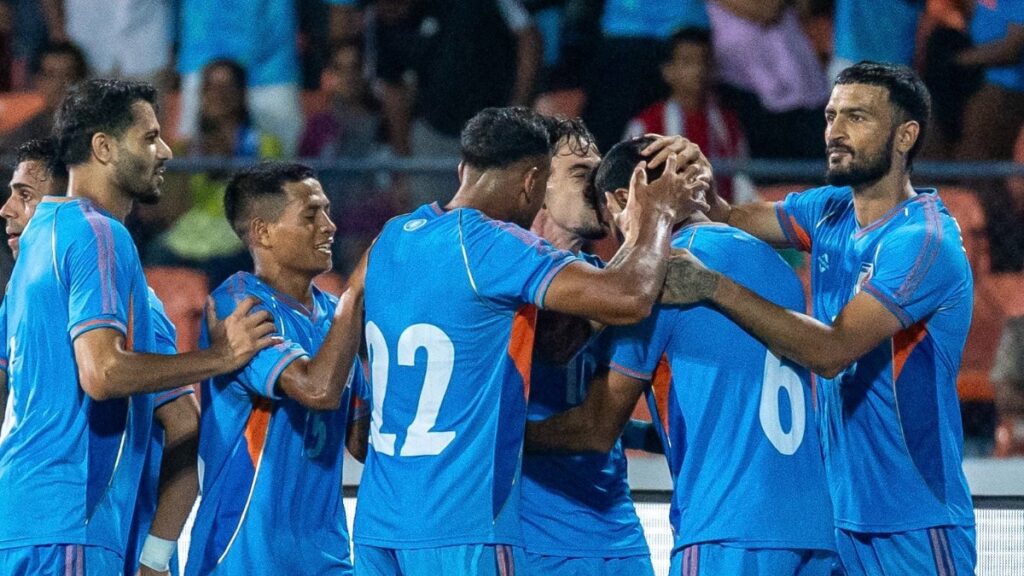
By the time India took the lead in the 41st minute, it felt like the reward for a half in which they had steadily grown into the game.
Akash Mishra made a driving run down the left as Panama’s defensive line began to stretch, and his diagonal delivery found Williams in exactly the kind of position India had been trying to create for him. This time, the forward made no mistake, calmly slotting the ball into the bottom-right corner to send India 1-0 ahead.
Kanteerava erupted, and for a few minutes the empty seats that had been such a prominent part of the evening simply did not matter. The supporters who had made the effort to come were on their feet, the players were celebrating together, and India had something they had been searching for against a much higher-ranked opponent.
The context made the goal even more significant. Panama’s matchday squad included 12 players who had featured at the 2026 World Cup, with Csar Blackman, Toms Rodrguez and Jos Córdoba starting, while Orlando Mosquera, Michael Amir Murillo, Carlos Harvey, Cristian Martnez, Jos Luis Rodrguez, Jos Fajardo, Jiovany Ramos, Jorge Gutirrez and Azaras Londoo were among the substitutes.
India had not simply stumbled into a lead against an inexperienced side. They had spent the first half competing with a team that had recently been playing at the highest level of international football, and the way the goal was created reflected the confidence that had grown within the side.
Panama came out after half-time with considerably more urgency, looking far more determined to impose themselves on the game. Their first real shot on target came around the 50th minute through Murillo, although Gurpreet Singh Sandhu collected it without much difficulty, and India continued to look dangerous whenever they found space to break forward.
For a while, the game had an interesting balance to it. Panama had the greater need to respond, while India were playing with the confidence that comes from realising the supposedly stronger opponent can be unsettled.
PANAMA HIT BACK, INDIA KEEP PUSHING
The equaliser, when it arrived, came against the flow of the game and changed the feel of the contest almost immediately.
Omar Javier Valencia, who had come off the bench, picked up the ball outside the box and decided to try his luck from distance. His effort flew towards the top corner, leaving Gurpreet seemingly with no answer as the ball found the net and Panama were suddenly level.
Valencia raced towards the touchline to celebrate with his coach and teammates, while India had to reset after seeing a lead they had worked so hard for disappear in a single moment.
Jamil responded with changes, bringing on Edmund Lalrindika, Anirudh Thapa and Sahal Abdul Samad for Williams, Ricky Shabong and Vikram Partap Singh. Without Williams, India lost some of the pace and pressing that had caused Panama problems earlier, and the visitors began to see more of the ball as the Indian defence was stretched further than it had been in the first half.
But India did not retreat into their shell.
A loose pass from the Panama defence soon opened up another opportunity, with Ashique producing one of his best moments of the evening as he sent a superb cross into the box. Lalrindika, who has been in excellent form for East Bengal, had the chance to restore India’s lead but sent his effort wide.
That miss seemed to give India another lift rather than knock the momentum out of them. Sahal continued to look for spaces between the lines, Jay Gupta pushed forward from deep and Manvir Singh remained involved as India began putting together another series of attacking moves.
The final ball was not always clean, and Williams’ absence was increasingly noticeable because India had lost their most dangerous outlet in transition, but the intent was still there. Even when Panama began controlling more possession, India kept trying to get forward instead of simply protecting the point.
The closing stages became a proper test of India’s discipline as Panama worked the defence from side to side, but the Blue Tigers continued to find opportunities of their own. They pushed into added time looking for one more chance, and for long periods it felt as though either side could still find the winner.
Neither did. The 1-1 draw therefore felt quite different from a routine friendly stalemate. India had not spent the night hanging on against Panama; they had taken the lead, forced the visitors to respond and continued trying to win even after the equaliser.
The 9,039 attendance will remain a strange footnote to the night, especially given the significance of the occasion and India’s return to Kanteerava for the first time since their 2023 SAFF Championship triumph. But once the match began, the football gradually pushed the empty seats and pre-match arguments into the background.
Panama had 12 players with World Cup experience in their matchday squad and arrived ranked 44th in the world, while India came into the game ranked 138th and under plenty of pressure after a difficult period for the national team. The visitors also handed five players their international debuts, but that does not erase the fact that India competed with a side carrying considerable experience at the highest level.
For Jamil, this was easily one of India’s strongest performances since he took charge, not because the draw suddenly changes everything, but because his team showed they could stay in a game against a stronger opponent without losing their ambition.
And perhaps that is what made Friday night so important.
Indian football has spent enough time talking about what is wrong. Against Panama, for one evening at least, the conversation was about what India got right. The 1-1 scoreline may not look extraordinary on paper, but the manner in which India earned it, and the belief they showed in doing so, made this a result worth remembering.
– Ends