India vs Sri Lanka: A Test series that could define the road ahead
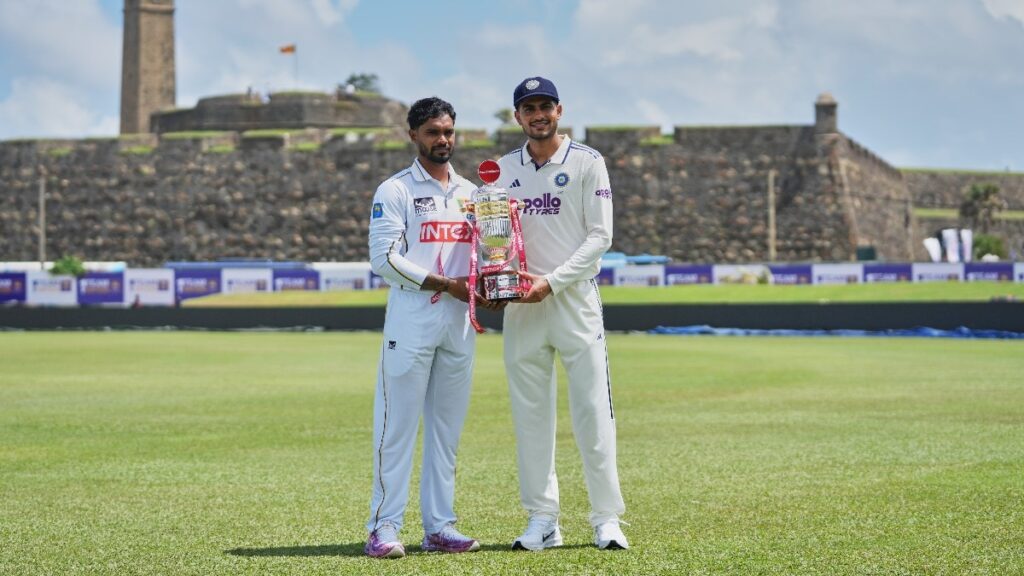
India’s upcoming two-Test series against Sri Lanka promises to be more than another chapter in the long history between the two sides. With the World Test Championship (WTC) points at stake, India will be looking to regain momentum in the longest format, while Sri Lanka will aim to make full use of home conditions and challenge one of the world’s leading Test teams.
The series will begin with the first Test in Galle from August 15 to 19, followed by the second Test in Colombo from August 23 to 27. For India, the tour represents an opportunity to return to winning ways and build confidence for the matches ahead in the WTC cycle.
India last played a Test series in Sri Lanka in 2017, when Virat Kohli’s side produced a dominant performance to win the three-match series.
Players such as Shikhar Dhawan, Ajinkya Rahane, Cheteshwar Pujara, Hardik Pandya and Ravichandran Ashwin played important roles in that campaign. Nine years later, Shubman Gill’s India will hope to produce a similar result.
The challenge, however, will be significantly different this time.
India’s batting faces a major test
The Sri Lankan conditions are likely to place considerable emphasis on spin. Indian batters Shubman Gill, KL Rahul and Rishabh Pant will therefore need to adapt quickly to slower and turning pitches.
Against quality spin, footwork and shot selection will be crucial. Batters will need to decide when to use their feet, when to sweep and when simply to defend patiently. Any failure to adapt could allow Sri Lanka’s spinners to put India under sustained pressure.
This will be particularly important after India’s disappointing Test series against South Africa in November 2025, when they lost 0-2 at home.
The Sri Lanka series gives the Indian batting unit an opportunity to rebuild confidence and establish a more reliable approach against spin.
Yashasvi Jaiswal will also be an important part of India’s batting plans. If India are to win in Sri Lanka, their top order will have to provide the foundation for the middle order to build upon.
Bumrah’s absence increases the pressure on India’s bowlers
One of the biggest concerns for India is the absence of Jasprit Bumrah. His injury removes one of the team’s most experienced and dependable fast-bowling options and places greater responsibility on the rest of the attack.
Mohammed Siraj will be expected to lead the pace attack, while Prasidh Krishna and the other bowlers will have important roles to play. The conditions in Galle could also make India’s spin department particularly significant.
Ravindra Jadeja’s return is therefore a major boost.
Jadeja brings value in all three departments. He can contribute important runs, take wickets and save runs in the field. His experience could prove especially valuable on Sri Lankan pitches, where spin is expected to play a major role.
The combination of Jadeja, Kuldeep Yadav and Manav Suthar could give India several options as the team attempts to take 20 wickets in each Test.
India may also look to debutant Auqib Nabi, whose inclusion could add another dimension to the bowling attack. With Bumrah unavailable, the bowling unit will need collective discipline rather than relying on one individual.
Shubman Gill’s leadership under the spotlight
The series will also be an important test of Shubman Gill’s leadership. Gill’s captaincy journey has not yet produced the consistency India would want in Test cricket. After the drawn series against England last year, he will be under pressure to make the right tactical decisions in Sri Lanka.
Captaincy in Test cricket requires patience as much as aggression. Field placements, bowling changes and decisions regarding spin and pace can have a major impact over five days.
Gill will need his players to support his decisions with performances on the field. At the same time, he will have to demonstrate that he can manage difficult periods and keep the team focused when the opposition gains momentum.
A successful series could therefore be important not only for India’s WTC campaign but also for Gill’s development as a Test captain.
Sri Lanka will not surrender home advantage
Sri Lanka enter the series with the advantage of playing at home. That should not be underestimated.
Sri Lanka’s strength will come from their familiarity with their own conditions. The home side will know how the pitches behave and how to use the slower surfaces to their advantage.
Head coach Gary Kirsten can likewise play an important role in helping the squad prepare tactically and mentally for the challenge.
Sri Lanka’s recent performances have shown that they possess enough talent to compete in different conditions. India therefore cannot afford to underestimate them.
The WTC equation adds significance
The World Test Championship provides an additional layer of importance to this series.
Neither India nor Sri Lanka has won the WTC since the competition began in 2019. India have, however, reached the final twice, finishing runners-up in 2021 and 2023.
Every Test in the current cycle therefore carries significance. India will want to collect as many points as possible, while Sri Lanka will also see the series as an opportunity to strengthen their position.
The importance of the WTC means that neither side can afford to treat these two matches as isolated contests. Results in Sri Lanka could influence the direction of both teams’ campaigns over the coming months.
– Ends