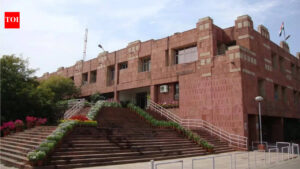
Jensen Huang and his wife Lori pledged $30 million to Stanford; in 2010, the university opened an engineering centre housing more than 270 faculty, staff and students, with workshops for building prototypes

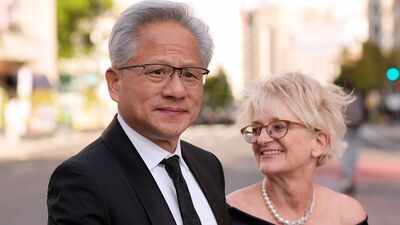
Jensen Huang and Lori helped fund Stanford’s engineering centre with their $30 million donation. The university dedicated the Jen-Hsun Huang Engineering Center as a shared space for research, education and collaboration across disciplines. The building houses more than 270 faculty members, staff and students, along with workshops for building prototypes and models.The centre was established as part of Stanford’s Science and Engineering Quad, providing a shared space for students and researchers working across engineering, science and medicine. Huang, the co-founder and chief executive of Nvidia, received his master’s degree in electrical engineering from Stanford in 1992.
What is the Jen-Hsun Huang Engineering Center
The Jen-Hsun Huang Engineering Center was dedicated on October 5, 2010, as a new home for Stanford’s School of Engineering. The building was designed to serve as an academic and social destination for students and faculty, bringing together researchers from different departments and disciplines.The centre houses members of the Department of Management Science and Engineering, the Institute for Computational and Mathematical Engineering and the Stanford Technology Ventures Program. It also accommodates the School of Engineering’s Dean’s Office and supporting departments.The building features the 300-seat NVIDIA Auditorium and the Frederick Emmons Terman Engineering Library. The library was designed to support collaboration and help students and faculty access both digital and print research materials.
How the centre supports engineering research and innovation
The Huang Center was designed to encourage interaction between engineering researchers and colleagues in biology, chemistry, physics and medicine. Its open spaces, student lounges, and flexible furniture provide space for discussion and collaboration.The building also includes workshops for constructing prototypes and models, allowing students to develop and test ideas. These facilities reflect the university’s approach to engineering education, which combines specialised technical knowledge with teamwork, communication, entrepreneurship and design.At the centre’s dedication, Stanford President John Hennessy said the building “will foster future innovation and groundbreaking research for years to come.”Hennessy also thanked the Huangs for their support, saying their contribution reflected a tradition of alumni helping future generations access educational opportunities.
Why Jensen Huang supported the engineering centre
Huang said the project was intended to give students and teachers a place to work together and develop new ideas.“To build a better future we must invest in tomorrow’s innovators,” Huang said. “There is no better place to do this than Stanford. Magic happens time and again when bright students learn together in an environment rich with faculty who are the best in their fields. With this new engineering center, we are giving students and teachers a place to collaborate and create our future. I hope that students will find inspiration here, and that Stanford will be as important in shaping their lives as it has been in mine.“The centre was also designed to address changes in engineering education. James D. Plummer, then dean of Stanford’s School of Engineering, said engineers needed to develop expertise in their fields while learning to work across disciplines and navigate a global economy.
The Huang Center’s place in Stanford’s campus
Located in the Science and Engineering Quad, the building forms part of Stanford’s broader campus plan, connecting the university’s historic Main Quad with newer science and engineering facilities.Its design combines a modern interpretation of Stanford architecture with sustainability measures. The university said the Science and Engineering Quad buildings were designed to reduce potable water consumption by up to 90% and energy use by about 50% compared with buildings of similar size and use.Exhibits inside the centre highlight Stanford Engineering’s history of innovation and technology transfer. These include displays inspired by the garage where Hewlett-Packard began and servers used by Stanford graduate students Sergey Brin and Larry Page while developing the PageRank algorithm that led to Google.