Tejaswin Shankar ‘pissed’ after Asian Games bronze despite leading decathlon
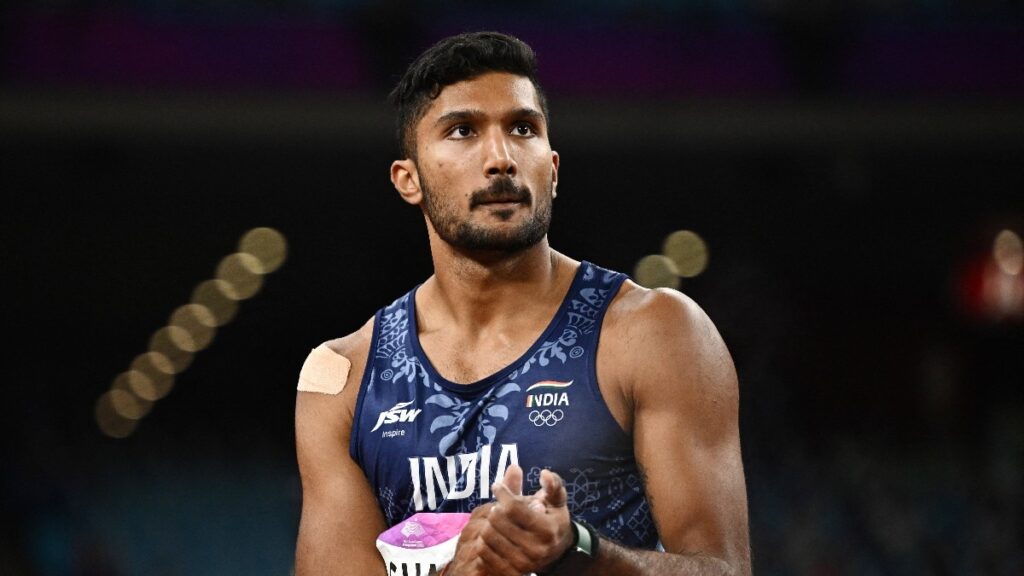
Tejaswin Shankar finished his Asian Games decathlon with a bronze medal, but there was little satisfaction in it. After leading the competition at the end of the opening day, the Indian slipped down the standings and was left feeling that he had let a better medal get away.
Shankar finished third with 7,934 points, behind Japan’s Yuma Maruyama and China’s Chen Xinghua. It was his second successive Asian Games medal after silver in Hangzhou, but the 27-year-old’s mind was already on what could have been.
Asian Games 2026, September 28: UPDATES
“I’m just pissed at this point. I’m so disappointed with the bronze medal. I just lost that silver. I’m pretty pissed. It’s a lost opportunity for a gold, a lost opportunity for a silver. So here I am settling for a bronze medal,” Shankar told Sportsstar.
That frustration came from the way the competition had started. Shankar had won the long jump and high jump on the opening day and began day two at the top with 4,338 points, giving himself a genuine chance of improving on his previous Asian Games silver.
WHY DID THE BRONZE HURT SO MUCH?
By the time the decathlon reached the 1500m, gold was already out of reach and silver was difficult to chase. Shankar, however, still found something to race for. He stayed with Maruyama before moving past the Japanese athlete to win the final event in 4:33.09.
“At that point, it was not about the medals, but about the fact that Yuma beat me at the Asian Indoor Championships in the last 1km,” he said. “So I created this little competition in my head. Throughout the 1500, when he was in the front, that was what was going on in my head. I have to catch him, and in the end, wahi paani usko pilaunga.”
The 1500m victory could not change the overall podium, but it gave Shankar one moment of satisfaction in a competition he felt had slipped away.
He was also unwilling to blame Nagoya’s difficult conditions for his performance.
“I think my performance was pretty bad. It’s really bad. I can’t even make up things to be able to justify this performance other than the fact that halfway through day two, I was thinking that I’ll just be done with competing for this year. So that’s the truth,” he said.
The mental demands had become as significant as the physical ones.
“The reality is the decathlon is such a physical event, but at the same time, it’s very, very mental,” Shankar said.
CAN TEJASWIN TURN FRUSTRATION INTO PROGRESS?
Shankar’s season, however, offers a more encouraging picture. He competed in four decathlons this year, a workload he now feels needs to be managed better, but each of those competitions produced more than 7,900 points.
“I’ve been going on since 30th of January and, not blaming anybody, I had to do it. I needed to get that performance, needed to get that practice, so I did four this year,” he said.
“I just have to find another 300 points and try to add all the good things that I did throughout the year into one meet, and there is your 8300-point total score,” Shankar added.
For now, rest comes first. He has also been managing a knee problem since the Commonwealth Games and wants to use the off-season to address it properly.
“The whole goal was to try and fix the knee because that’s what bothered me in the Commonwealth Games,” he said. “Now that I’m in my off-season starting this very second, I think we’ll have a lot of time to fix this issue and come back stronger next year.”
The workload will also need reconsideration if Shankar is to push towards the World Championships and the Olympics.
“I can’t be doing five decathlons in a year and then expecting 8400 points at the end of it and qualify for the Olympics,” he said. “This year I didn’t have any option. It was just me and my greed to do more. And I guess it paid off.”
For all his frustration, Shankar has not fallen out of love with the sport.
“I hate myself for not winning a silver, but I don’t hate the sport. I absolutely enjoy the sport,” he said.
The bronze may not have been what he wanted, but Shankar leaves Nagoya knowing exactly what he needs next. More recovery, better management and, above all, a chance to put all the good parts of his season together in one decathlon.
– Ends