Ford CEO wants level playing field with Toyota, GM imports as USMCA trade talks reopen
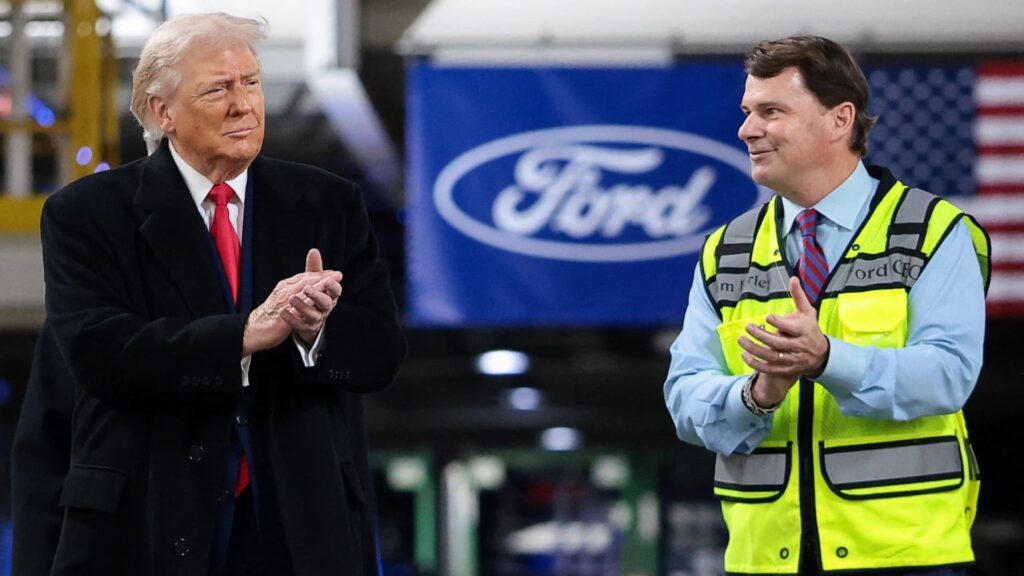
DETROIT — As negotiations officially reopen for the USMCA North American trade deal, Ford Motor CEO Jim Farley is clear about what the company wants under the new talks: a more level playing field.
He told CNBC he wants automakers such as Ford that largely produce their vehicles domestically to be awarded under the deal. Along with that, Farley said other automakers — such as General Motors and Toyota Motor — that may produce here but also heavily rely on imported vehicles should get more penalties.
“It’s imperative that any new agreement makes it easier, not harder, to compete with U.S. makers who import from Japan, South Korea and global competitors that import from those locations,” Farley told CNBC during a phone interview Wednesday. “That’s the key for us.”
Producing in such countries is typically less expensive due to labor costs.
GM and Toyota are No. 1 and No. 2 in U.S. sales, respectively, while also being the top two importers of vehicles in 2025.
GM imported 1.17 million vehicles, or 41% of its U.S. sales, while Toyota imported more than 1.19 million units, or 47%, of its domestic sales, according to industry data.
Hyundai Motor, which plans to roughly double its amount of U.S.-produced domestic sales to 80% by 2030, was the largest importer of vehicles from South Korea, followed by GM.
Ford, meanwhile, reports it assembled over 2 million vehicles in the U.S. last year — more than any other auto manufacturer, including 311,000 units for export to more than 60 international markets. It imported 378,000 vehicles, or 17%, of its 2.2 million sales last year.
“Ford’s a leader of U.S. auto production with the most U.S.-built vehicles but, more importantly, we import very few, and we export the most, and we have the most UAW [union] workers here,” Farley said. “So we’re very proud, especially of the ratio between what we build here and what we import.”
Farley’s comments come as the Trump administration has decided not to renew its trilateral trade pact with Canada and Mexico, instead opting to conduct annual reviews of the treaty that could eventually lead to an end to the agreement by 2036.
The auto industry represented about 18% of America’s trading with its neighboring countries last year, according to industry data, making it one of the key sectors in the discussions. Automakers and others watching the talks are concerned that reopening the deal could create additional trade uncertainty that leads to lower investments and fewer jobs.
A consortium of U.S. trade groups representing most automakers, dealers and suppliers on Wednesday voiced support for a trilateral deal like the countries currently have.
“We urge the leaders of the U.S., Canada, and Mexico to swiftly reach consensus on an extension of USMCA that preserves the existing trilateral partnership, returns to preferential treatment for qualifying goods, and continues the stability and predictability that has helped the industry thrive for the past six years,” they said in a statement.