America’s data center fight is a preview of what's to come for the rest of the world
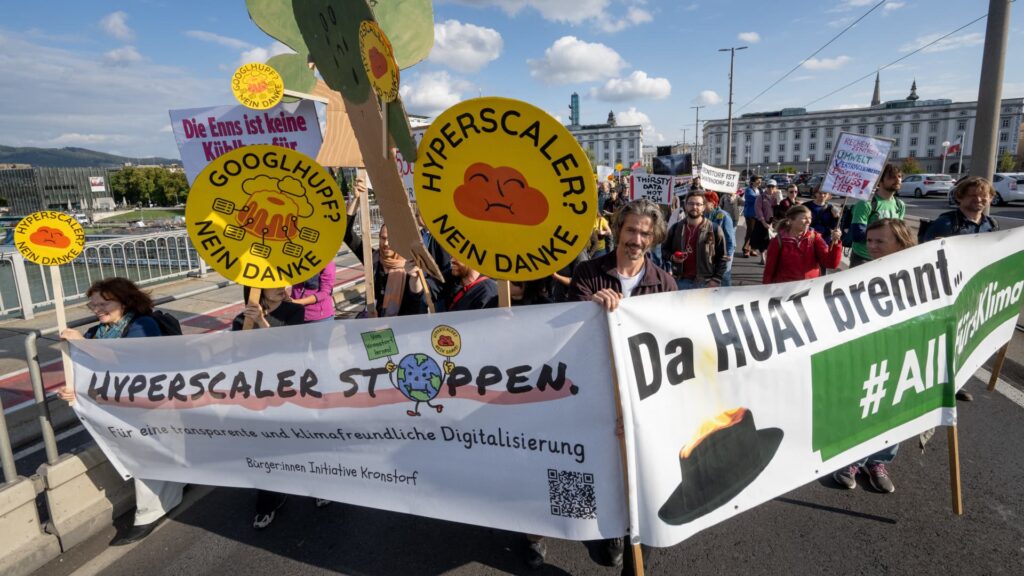
As the AI boom becomes a major part of political debate, the public backlash against data centers in the U.S. is spreading to Europe and Asia — raising risks for investors.
Across the Atlantic, negative sentiment is growing in Europe, which has more at stake due to its densely populated countries and higher electricity prices, experts told CNBC.
Similar tensions are emerging in South Korea, with growing opposition to data centers near residential areas and proposals for tighter local restrictions, even as the national government pushes to accelerate development.
Public opposition has already impacted around $42 billion of data center investments in Europe, in account delays and cancellations, according to research from STL Partners. That compares to around $77 billion in the U.S.
The pushback could be the “straw that breaks the camel’s back,” Olivier Darmouni, associate professor at HEC Paris who specializes in the energy transition, told CNBC.
Data center opposition is growing in Europe
More than 70 data center projects in Europe were rejected or restricted between January and April — more than in all of 2025, according to the European Data Center Monitor. It found that pushback had snowballed from local town halls to courts, regulators and parliaments.
Scotland has paused planning approvals for new hyperscale data centers after campaigners called on the government to avoid the “cautionary tale” of Ireland, where overwhelming power demand led to a moratorium.
Constraints have been rising in the Nordics, where investors were drawn to large tracts of land and renewable energy. After a surge in power applications, Denmark passed an emergency law that could see data centers at the back of the queue for grid power applications.
Spain also proposed new data center rules this summer, requiring data centers to source 80% of their electricity from renewables. Projects in the U.K. have stalled after pushback from locals.
Much of the concern centers around water usage, power consumption, electricity prices, and the sheer amount of space that some centers require. There is also little agreement on how many permanent jobs the sector creates, and no precedent for projecting a center’s economic value per megawatt.

“The gains of AI are very diffused,” Darmouni told CNBC.
“There’s definitely been more understanding of the scale of the potential AI build-out and its geographical spread, and perhaps … more information about how much bigger these are, and that they’re a little bit more like giant ghost warehouses that consume a lot of resources and can hurt local communities in some ways.”
Europe’s denser population, and the fact that many data center operators are U.S. companies, might mean that the backlash hits harder, the professor added.
What’s happening in Asia
South Korea, home to tech giants Samsung Electronics and SK Hynix, sits at the heart of the AI supply chain. In June, its government named AI data centers as one of three major investment projects, alongside semiconductors and physical AI.
But its push to build the infrastructure needed is running into resistance at the local level.
In the Geumcheon district of southwestern Seoul, residents have called for authorities to revoke the building permit and halt construction of a data center near their homes, according to the local government.
In July, officials announced plans to require consent from a majority of residents living within 200 meters of proposed data center sites and to introduce a three-stage system for reviewing projects and mediating disputes.
Residents have also gathered outside the local government office on weekday mornings for months to protest against the project. The demonstrations had continued for 172 days as of mid-August, according to local media.
In Gwacheon, a city just south of Seoul, a local council member proposed an ordinance aimed at protecting nearby residents from risks associated with data centers operating around the clock, including potential fires involving backup batteries.
Should investors be worried about the backlash?
Despite the pusback, the AI boom shows little sign of slowing down.
But a community’s ability “to derail a $10 billion [data center] plan is quite powerful,” said Asya Walters, managing director at Alvarez & Marsal.
She told CNBC the business-friendly environment in the U.S. has historically made it easier to overcome pushback.
But in Europe and Asia, there’s some “hot and coldness” at the country level about where demand is going, Walters said. The “push and pull” between favorable conditions for data centers and more restrictive regulation can be challenging for investment.
Public backlash can also end up raising costs for operators, because even if they pull out of a project before construction starts, money will likely have already been spent.
Though most capex expenditure happens after the permits are in place, operators spend a lot to reach that point, “so there is some loss that could happen there if they never get the permits,” Walters said.
We used to be a completely unknown part of the economy. We were just a black box. Now we are one of the fundamental layers driving the economy.
“Digital infrastructure is becoming more visible and it’s understandable that communities want to understand what’s being built near them, why it’s needed and how local impacts are being managed,” said Eulalia Flo, vice president of growth and emerging markets, EMEA at Equinix, one of the biggest data center operators in Europe.
“We don’t see this as a structural constraint on growth, but the policy environment is genuinely tightening in some markets,” said Flo.
But the AI buildout has meant “a misunderstanding of the industry in a very broad sense,” according to Dominic Ward, CEO of data center operator Verne.
“We used to be a completely unknown part of the economy,” Ward told CNBC. “We were just a black box. We were just a building that had stuff that went in that nobody understood. Now we are one of the fundamental layers driving the economy.”
He added: “Now everybody knows where they are, so there’s kind of no hiding behind this.”