Australia's Sandpapergate bigger than Cronje's match-fixing: Ex-England captain
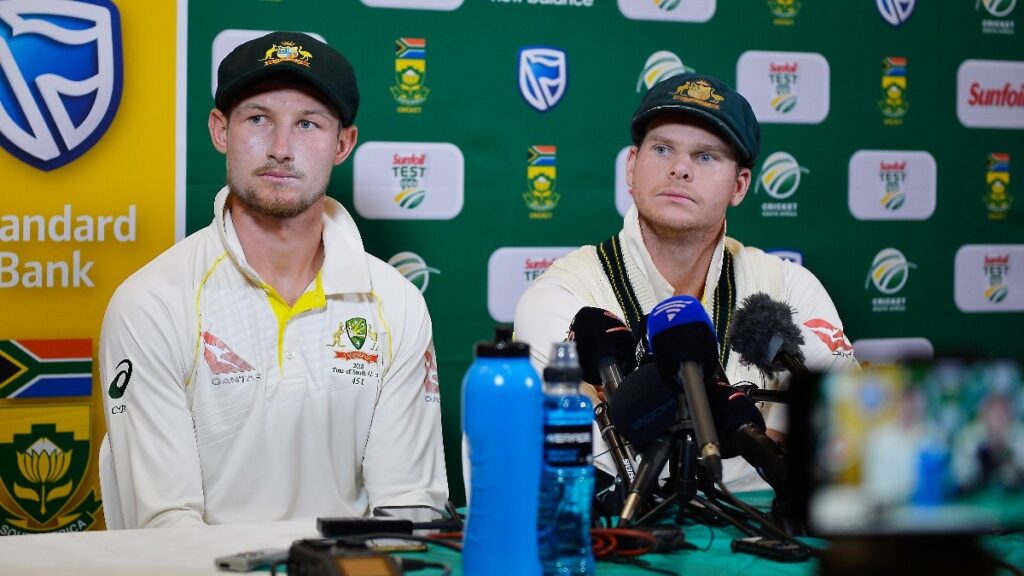
Geoffrey Boycott believes Steve Smith and David Warner should have been banned for five years for their roles in Australia’s 2018 ball-tampering scandal. The former England opener has also rated Sandpapergate as more serious than the match-fixing scandal involving former South Africa captain Hansie Cronje, citing the alleged involvement of a much larger group.
The controversy has returned to the spotlight following fresh revelations about the Cape Town Test, with Cricket Australia and senior players Pat Cummins, Josh Hazlewood and Mitchell Starc facing renewed scrutiny. Boycott, meanwhile, has stood by his view that the punishments handed to Australia’s senior players were too lenient.
Writing in his column for *The Telegraph*, the former England opener said the scale of involvement set Sandpapergate apart from the Cronje affair.
“The sandpaper scandal is even bigger than Hansie Cronje’s match-fixing, which ripped apart South Africa cricket more than 25 years ago. This is bigger than anything I have read or seen in cricket: a whole team cheating,” Boycott wrote.
He argued that Cronje had involved only two younger players, Herschelle Gibbs and Henry Williams, in his plans, while the rest of the South African squad and coaching staff knew nothing about it.
“Cronje’s crimes mainly involved him recruiting a couple of junior players, Herschelle Gibbs and Henry Williams, into his scheme. The rest of the squad and coaches had no idea,” he added.
FIVE-YEAR BANS FOR SMITH AND WARNER?
Boycott has never been convinced that the punishments handed to Smith and Warner were enough. Both players received 12-month suspensions following the Cape Town Test, while Cameron Bancroft was banned for nine months.
“I said at the time and have always believed that David Warner and Steve Smith got off lightly and should have been banned for five years,” Boycott wrote.
The former opener also took issue with the suggestion that the ball-tampering incident was a spur-of-the-moment decision. He said it was carefully planned, with Bancroft, the junior member of the group, left to carry out the act.
“What they did was so serious. It wasn’t a spur-of-the-moment incident; it was carefully planned in two Tests in the hope of cheating to win and trying to get away with it by letting the junior player in the team do the dirty work because nobody would be watching him,” he said.
Boycott was particularly scathing about what he described as the wider involvement of the Australian team and the subsequent attempt to pin the blame on three players.
“But sandpaper involved the whole Australian team. The squad and coaches were all up to their necks in it, plotting and planning to cheat en masse, and the cover-up let three players take the blame. It is mind-blowing and unbelievable how they all went along with it. That is how huge it is,” he said.
HOW THE CRONJE SCANDAL UNFOLDED
Cronje’s involvement with bookmakers came to light in April 2000. The South African captain initially denied the allegations but admitted four days later that he had accepted money from a London bookmaker. He was removed as captain that same week.
The King Commission subsequently heard how Cronje had tried to involve Gibbs and Williams in a fixing arrangement during an ODI against India in Nagpur. He allegedly offered each player $15,000. Gibbs was asked to score fewer than 20 runs, while Williams was told to concede more than 50 runs.
Neither player went through with the plan. Gibbs smashed 74 off 53 balls, while Williams suffered a shoulder injury before completing his second over.
Cronje was handed a life ban in October 2000, while Gibbs and Williams received six-month suspensions.
The punishments for the Cape Town scandal were considerably different. Smith and Warner served 12-month bans, Bancroft received nine months, and no member of the coaching staff was punished. Head coach Darren Lehmann was cleared by Cricket Australia’s investigation before resigning days after the scandal broke.
– Ends