Ishan Kishan's Duleep Trophy effort makes his Test comeback case hard to ignore
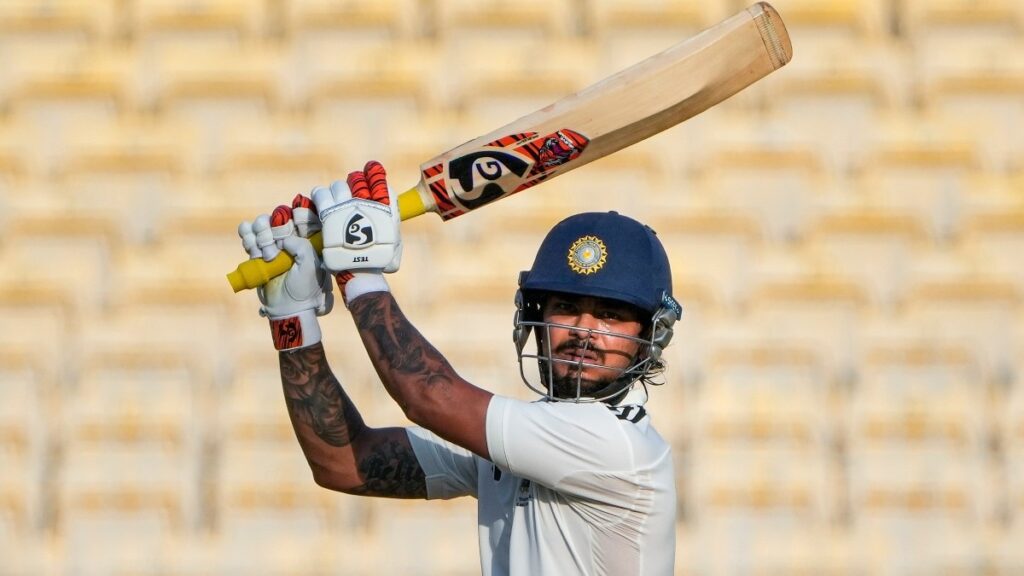
Back in 2023, Ishan Kishan was an all-format player for India. A series of unforeseen events eventually saw him lose his place in the team and even miss out on a BCCI central contract. His route back began in domestic cricket, where he put in the hard yards, scored hundreds in the Ranji Trophy and made 517 runs with two hundreds as Jharkhand won the 2025-26 Syed Mushtaq Ali Trophy.
The BCCI contract and a place back in India’s white-ball squads soon followed. Test cricket, however, remained a different story. Kishan had barely featured in the conversation around India’s Test plans for nearly three years.
His 270 in the Duleep Trophy final has now changed that. It does not guarantee a way back, but it gives the selectors a substantial first-class performance to consider. More importantly, Kishan showed in Chennai that he can occupy the crease for long periods without losing the attacking game that has made him such a valuable white-ball player.
The timing could hardly have been better. After India’s squad for the West Indies tour was announced, chief selector Ajit Agarkar asked Kishan to play more domestic cricket and put together performances. Kishan responded with the biggest first-class innings of his career.
He batted for 522 minutes, faced 334 balls and struck 30 fours and seven sixes as East Zone posted 708 against South Zone. He resumed the second day on 111 not out, having reached his hundred off 122 balls on the opening evening, and continued for several more hours.
South Zone tried pace, short bowling and spin. Kishan adjusted to all of it. He did not feel the need to force the game forward every time he faced a bowler. He left the ball when required, waited for scoring opportunities and attacked when they came. That balance has not always been easy for him in red-ball cricket.
Kishan has previously admitted that regular T20 cricket affected his decision-making. The shortest format rewards constant intent, whereas Test cricket often demands patience and a willingness to let the game come to you. In Chennai, he found that balance.
THE AGARKAR MESSAGE
Agarkar had made Kishan’s immediate task clear. After India’s squad for the West Indies tour was announced, the chief selector said: “He [Ishan] is a very good player, as we know. But we’d like him to play a bit more cricket and show some performances.”
Kishan has now produced exactly that. He did so with Agarkar watching from the Chepauk stands, although the significance of the innings went beyond the presence of the chief selector.
The 270 was built around partnerships. His 230-run stand with Kumar Kushagra, who scored 101, was central to East Zone’s huge total. Kishan was prepared to let the partnership develop rather than try to dominate every phase himself.
“When you’re playing a final and you are already a multi-format player, who has played for India for quite some time, the team members expect you to score runs. So, it’s very important for me to be in the middle and get as many runs for your team,” Kishan said.
“The plan remained simple: keep adding 50-run partnerships as much as possible. A lot of things factor in picking up when their bowlers are tiring, when they are opening up the field – so you keep batting around these things without worrying about the result.”
It was a mature approach to a long innings, and one that matters when assessing whether Kishan’s game can translate to Test cricket.
THE RED-BALL WORK
Kishan’s preparation for the Duleep Trophy suggests the change was deliberate. He said he had spent time at the BCCI Centre of Excellence working specifically on his red-ball batting before joining East Zone.
“I was here at the BCCI CoE before coming here. We were practicing there, specifically with the red ball. When you play T20s regularly, you start playing a lot of shots – which is what happened in my first innings against the North East Zone,” he said.
The final showed what that work was intended to achieve. Kishan did not abandon his natural aggression. Instead, he seemed more selective about when to use it. He scored freely when the bowlers offered him opportunities but was comfortable defending or leaving the ball when there was little to gain.
That is a useful adjustment for a batter whose natural game has always been built around attacking intent. It also explains why the 270 means more than simply another big domestic score.
A DIFFERENT KISHAN
There has been a change in Kishan’s approach away from the middle as well.
Losing his place in the Indian team and missing out on a central contract in 2023 forced him to rebuild his career through domestic cricket. Kishan believes that period helped him strip away some of the pressure and distractions that had affected his thinking.
“I didn’t actively try to change myself. It just happened naturally. When I was out of the (India) squad, I realised that we ultimately only have one job to do: simply to score runs. That is the only thing that helps you in your career,” he said.
“Any other thoughts will only manipulate your mindset, push you into overthinking, and pile on unnecessary pressure. I realised that those extraneous thoughts aren’t necessary. Our job is to step in and win matches for the team.”
His performances since then tell their own story.
Kishan scored hundreds in the Ranji Trophy during the 2025-26 season and made 517 runs, including two hundreds, in the Syed Mushtaq Ali Trophy as Jharkhand won the competition. He subsequently returned to India’s T20I and ODI squads and regained his BCCI central contract.
Now he is trying to make the same journey in red-ball cricket.
“The best thing I’m doing nowadays is not thinking about anything. My job as a batsman is just to go there, watch the ball, and react to it and not keep any expectations from myself,” Kishan said.
That approach was evident in Chennai. He did not appear to be chasing a particular milestone. He stayed focused on the situation and allowed the innings to develop.
THE TEST CHALLENGE
The numbers alone will not get Kishan back into India’s Test XI. Rishabh Pant remains the first-choice wicketkeeper when fit. Dhruv Jurel is another option, while KL Rahul gives India flexibility as a batter who can also keep wickets.
Kishan’s return to the white-ball teams, therefore, does not automatically open the door to Test cricket. But 270 is difficult to ignore. It showed that he can put together a marathon first-class innings while retaining the attacking qualities that have served him so well in limited-overs cricket.
India’s next Test assignment is in New Zealand, less than three months away. Whether Kishan makes that squad will depend on what happens between now and then.
For the first time in nearly three years, though, he has given the selectors a reason to consider him for the longest format again.
– Ends