Over 2,000 teachers, students face political persecution in Bangladesh: Report
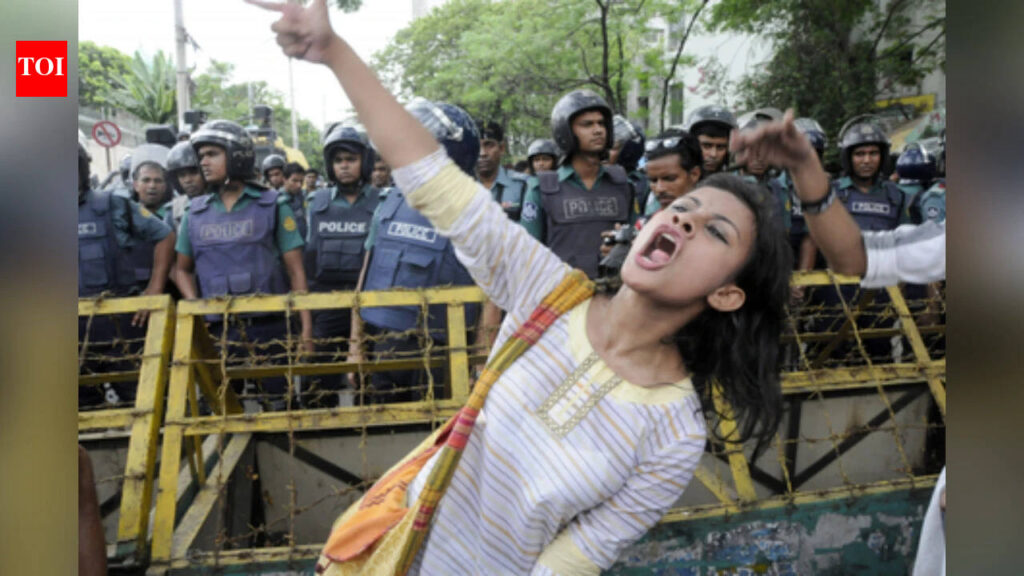
More than 2,000 students, teachers and academics across Bangladesh have faced alleged politically motivated persecution since August 2024, with cases ranging from academic exclusion and physical attacks to criminal proceedings and forced resignations, according to a report released by human rights organisation JusticeMakers Bangladesh in France (JMBF).The report, titled Persecution of Teachers and Students in Bangladesh’s Higher Education Sector: Academic Exclusion, Coercion and the Struggle for Justice and Accountability (August 2024–October 2026), documented at least 2,051 victims across 229 higher education institutions between August 2024 and October 2026.The Paris-based organisation said its verified records included 1,569 students, accounting for 76.5% of the victims, and 482 teachers and academics, making up the remaining 23.5%.It alleged that they were targeted because of their political affiliations with the Bangladesh Awami League and its affiliated organisations, or their actual or perceived sexual orientation.The findings point to alleged violations including politically motivated disciplinary action, intimidation, physical assaults, restrictions on examinations, exclusion from campuses and residential facilities, and pressure on teachers to resign.
Students face academic and residential exclusion
According to the report, 575 students experienced informal academic exclusion, which restricted or prevented their participation in education. Another 219 faced exclusion from residential halls or hostels, potentially affecting their ability to continue their studies.A further 576 students were affected by incidents involving mobs or unidentified attackers, JMBF said.The organisation also cited broader monitoring figures indicating that more than 100 students and former students were arrested or taken into custody in connection with examinations. It said more than 10,000 students and former students affiliated with the Awami League were reportedly arrested or taken into police custody.JMBF estimated that more than 100,000 students and former students with actual, alleged or imputed links to the Bangladesh Chhatra League may have faced politically motivated persecution or serious interference with their education.The organisation clarified that these broader figures were estimates and not independently verified national totals of unique individuals. They may overlap with its verified records and should not be added to the 2,051 documented cases.
Teachers face criminal cases, assaults and dismissals
The report also documented several forms of alleged professional and physical persecution targeting teachers and academics.At least 132 teachers experienced academic boycotts or exclusion from professional activities, while 121 faced criminal cases or prosecution and 107 were subjected to inquiries or investigations. Another 86 teachers reportedly experienced physical assaults, and 24 were dismissed from their positions.JMBF said the findings raised concerns about academic freedom, institutional independence, equal protection under the law and the right to education.It also documented allegations of discrimination linked to actual or perceived sexual orientation, including humiliation, violations of privacy, coercive questioning and institutional punishment.The organisation stressed that political affiliation alone could not establish an individual’s responsibility for misconduct. It said any disciplinary or criminal action must be backed by credible evidence and follow fair procedures, with those accused given an effective opportunity to respond.
JMBF calls for independent investigations and international scrutiny
Speaking at the release of the report, JMBF Founder President Advocate Shahanur Islam said universities should be centres of knowledge and critical thinking rather than spaces for political retaliation and discrimination.“Universities must be centres of knowledge, freedom and critical thinking—not places of political revenge, intimidation and discrimination,” he said.Islam said the organisation’s documentation of 2,051 victims across 229 institutions pointed to concerns over academic freedom and fundamental rights.“No student should lose the right to education because of political identity, and no teacher should lose their livelihood for holding a different political opinion. Political affiliation is not a crime, academic freedom is not a privilege, and education must never become an instrument of collective punishment,” he added.JMBF called on the Bangladesh government, university administrations, law-enforcement agencies and other authorities to end politically motivated exclusion, intimidation and violence.Among its demands, the organisation urged authorities to ensure unrestricted access to campuses, examinations and residential facilities for eligible students, and establish independent mechanisms to review contested suspensions, expulsions, dismissals and other institutional sanctions.It also called for investigations into allegations of physical attacks, mob violence, coercion, unlawful detention and abuses involving law-enforcement personnel. The report urged authorities to protect academic freedom and prevent discrimination based on political affiliation, opinion or actual or perceived sexual orientation.The organisation further sought the restoration of educational and professional opportunities for those subjected to unjustified restrictions, along with appropriate remedies and compensation.JMBF called on the United Nations Human Rights Council, relevant UN special rapporteurs, UNESCO, the European Union and international human rights organisations to examine its findings and encourage protective measures.The report warned that the alleged persecution could have consequences beyond individual cases, affecting students’ education, teachers’ careers and the independence of higher education institutions in Bangladesh.