Shreyas Iyer's captaincy under scrutiny: India skipper has to deliver with the bat too
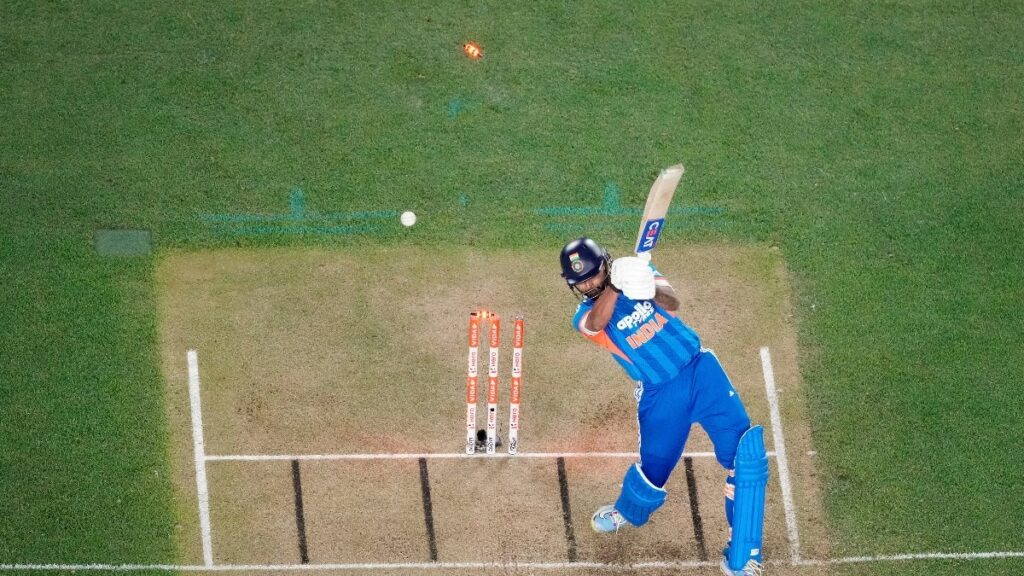
Shreyas Iyer knows how to win as a captain. He has an IPL title with Kolkata Knight Riders, led Punjab Kings to the final and earned a reputation for bringing the best out of his teams when the stakes are high. When India handed him the T20I captaincy, many expected his franchise success to translate to the national setup. But leading India has tested him in ways the IPL didn’t, and questions are beginning to mount.
The 87-run defeat to New Zealand in Auckland was another difficult evening for Iyer. India had already won the first three matches and secured the series, but the fourth T20I exposed the problems that have troubled the side in recent months. New Zealand smashed 259 for 7, with Glenn Phillips scoring 107 off 49 balls and Michael Bracewell adding 65 off just 25. India, in reply, were bowled out for 172.
Iyer could do little to stop the New Zealand onslaught. His bowlers struggled to find the right lengths, the middle overs slipped away and the opposition finished with a total that was always going to be difficult to chase. With the bat, he managed 22 off 11 balls before Adam Milne bowled him. India had already lost Sanju Samson and Ishan Kishan in the opening over, followed by Abhishek Sharma. The captain needed to stay at the crease and give the chase some direction. Instead, another wicket fell.
The series was India’s, but the manner of the defeat was hard to ignore. It was their second-biggest loss by runs in men’s T20I cricket, following the 125-run defeat to England in Nottingham earlier this year. For Iyer, the match brought two uncomfortable issues into focus: his handling of the bowling attack and his own inability to produce runs consistently.
A MIXED START AS INDIA CAPTAIN
Iyer’s first few months as India’s T20I captain have been a story of sharp swings. His team lost 2-0 in Ireland and then suffered a 4-0 defeat in England, with one match abandoned. He went through his first seven T20Is without a win, losing six and having one end without a result. It was hardly the start expected from a captain who had arrived with such an impressive record in franchise cricket.
There was a response. India swept Zimbabwe and Afghanistan 3-0, beat Japan in a one-off T20I and retained their Asian Games gold medal. They then drew the five-match series against West Indies 2-2, with one game washed out. The first three wins against New Zealand gave Iyer another series victory, before the Auckland defeat brought the scrutiny back.
After the fourth match against New Zealand, Iyer’s record stood at 14 wins, nine defeats and two no-results in 25 T20Is. Those numbers show that he has enjoyed success, and it would be unfair to judge his captaincy only through the defeats. But the heavy losses have exposed problems that a series win cannot make disappear. India have been giving away too many runs, and their captain has not always found the answers when opposition batters take control.
KAIF’S WARNING: IYER NEEDS TO LEARN
Mohammad Kaif has seen enough to believe that Iyer needs to rethink the way he uses his bowlers. The former India batter’s criticism is not about one poor night in Auckland. He believes there is a recurring pattern in Iyer’s bowling changes, particularly when it comes to managing his specialist options.
“Absolutely. Shreyas Iyer needs to learn from this,” Kaif said.
He pointed to instances when Arshdeep Singh and Bhuvneshwar Kumar had completed three overs each while six overs were still left in the innings. Arshdeep is India’s specialist left-arm option at the death, while Bhuvneshwar has the experience to handle both the new ball and the closing overs. Kaif felt Iyer should be preserving their overs for the stages when batters are looking to attack.
“You generally want to preserve your main bowlers for the 17th and 19th overs. That is a basic formula in T20 cricket,” he said.
Kaif also questioned the responsibility being placed on Nitish Kumar Reddy. He believes the all-rounder should be used as a fifth or sixth bowling option, with his overs completed in the middle phase, rather than being expected to perform the job of a frontline bowler.
“I have also noticed some shortcomings in Iyer’s captaincy, particularly in his bowling changes and decisions about which bowler should bowl at which stage,” Kaif said. “And I am not talking about just one defeat. This is a recurring pattern. Teams are regularly scoring 200, 225 and even 250 against us.”
The figures make that concern difficult to dismiss. Before 2026, India had never conceded 250 or more in a men’s T20I. Under Iyer, they have allowed three such totals in four months: England scored 257 for 3 in Southampton, West Indies made 252 for 4 in Ranchi and New Zealand reached 259 for 7 in Auckland.
It would be wrong to put every expensive spell at the captain’s door. India’s bowlers have struggled with execution, too. In Auckland, Nitish conceded 64 runs in four overs, while Phillips and Bracewell added 115 in 41 balls. New Zealand scored 146 in the final nine overs, with India’s attack unable to stop the flow of boundaries. Arshdeep was the one Indian bowler who offered some control.
Kaif also raised the issue of the changes around Arshdeep. Mayank Yadav returned after missing a match, Bhuvneshwar was brought back into the squad and Prince Yadav was given opportunities. Arshdeep has remained a regular, but the combinations around him have changed. Kaif believes that constant rotation could be one reason India have struggled to control the scoring rate.
His criticism also extends to Iyer’s IPL captaincy. Kaif claimed that Iyer’s bowlers had conceded 200 or more on nine occasions in the tournament. That figure needs to be seen in context, but it reflects the larger concern he has raised: Iyer must become better at reading the game and understanding which bowler can be trusted at a particular stage.
102 AGAINST WEST INDIES FEELS A LONG TIME AGO
The other part of Iyer’s problem is that the runs have not come often enough. His unbeaten 102 against West Indies in Lucknow on October 6 was a statement of intent. He reached his maiden T20I century in 42 balls, struck 10 fours and six sixes, and finished unbeaten on 102 off 43 deliveries. India chased 172 in 17.3 overs, winning by eight wickets.
It was the kind of innings that could have given Iyer a platform for the rest of the series. Instead, his next eight outings have told a very different story. He has scored 40, 1, 16, 22, 42, 7, 5 and 22, adding up to 155 runs at an average of 19.37. There has been no half-century in that stretch.
The strike rate of 147.61 shows that Iyer has not stopped attacking. But the bigger issue is how quickly his innings have ended. His 42 against New Zealand in the opening match offered some encouragement. The scores of 7, 5 and 22 that followed did not. In Auckland, with India three wickets down early, he had the chance to hold the innings together. He scored at a brisk pace but was dismissed before the powerplay had ended.
Iyer’s overall numbers in 2026 are more respectable than that recent run suggests. He has scored 666 runs in 25 T20Is at an average of 31.71 and a strike rate of 149. Across his T20I career, he has 1,770 runs in 76 matches, including one century and 10 half-centuries. There is enough in that record to show that he can be a valuable batter. But India need the player who scored that hundred in Lucknow to turn up more regularly, not just in one innings every few weeks.
The middle order is where India need someone to take charge when the top order fails. A quick start is useful, but a captain batting at No. 3 or in the middle order also has to judge when the team needs an attacking innings and when it needs someone to stay put. Iyer has the shots to change a game. What India have been missing is the consistency to make those shots count over a longer period.
THE CAPTAIN’S PLACE CANNOT BE TAKEN FOR GRANTED
Iyer’s IPL achievements explain why India chose him. They do not mean he should be judged by a different standard from the rest of the team. Suryakumar Yadav’s time as captain showed that leadership results alone cannot settle questions about a player’s place when his batting form comes under scrutiny. Iyer will face the same expectations.
There is no need to write him off after a difficult stretch. He has earned the opportunity, has experience of leading successful teams and has already produced an innings of the highest quality against West Indies. But the responsibility that comes with the captaincy also brings greater scrutiny. India cannot afford to have their captain struggling with the bat while the bowling attack repeatedly loses control of matches.
Iyer now has two jobs to do. He must show that he can use his bowlers better when the opposition begins to attack, and he must give India more than occasional bursts with the bat. The team have backed him with the captaincy. They need the runs and the decisions that come with it, too.
– Ends