Tears, heartbreak, history: How Lord’s became India women’s emotional home
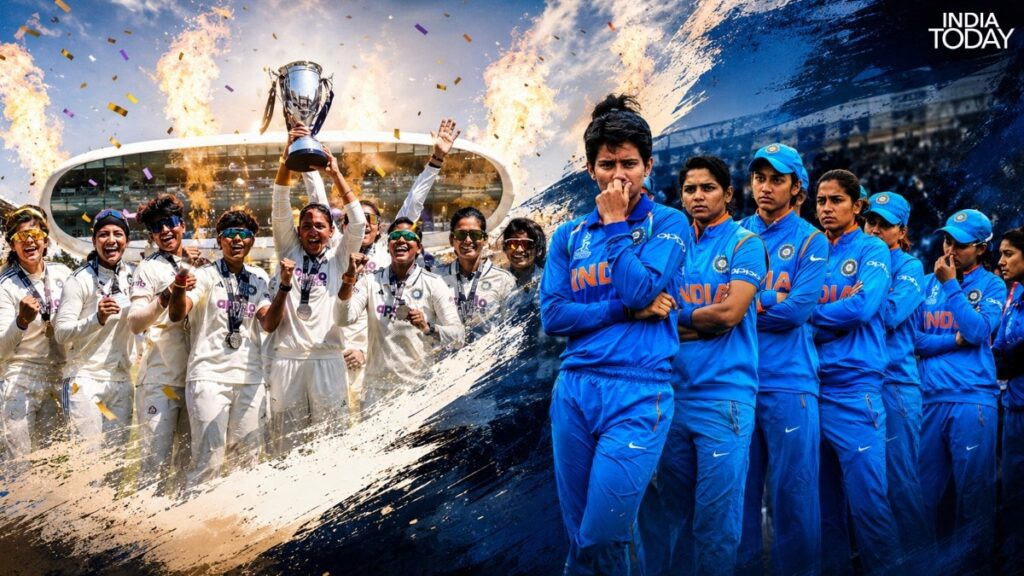
There are cricket grounds that host matches, and then there are grounds that shape destinies. For India’s women cricketers, Lord’s has long belonged to the second category.
For nearly two decades, the Home of Cricket has witnessed every emotion the team has experienced: excitement and heartbreak, controversy and closure, tears and triumph. It has seen dreams come agonisingly close to reality before slipping away at the final hurdle. It has been the setting for farewells that defined an era and defeats that altered the trajectory of women’s cricket in India.
And yet, on a bright July afternoon in 2026, Lord’s transformed itself once more.
On July 13, Harmanpreet Kaur’s side defeated England by 270 runs in the first-ever women’s Test at the venue, securing India’s maiden red-ball victory at the most iconic cricket ground in the world. It was not merely another win overseas. It was a moment that seemed to gather every memory India had created at Lord’s over the previous 20 years and rewrite the ending.
There was something almost poetic about the date itself.
Exactly 24 years earlier, on July 13, 2002, Sourav Ganguly’s men had chased down 326 against England in the NatWest Trophy final, producing one of the most enduring moments in Indian sporting history. Ganguly’s shirt wave from the Lord’s balcony became part of cricketing folklore.
24 years later, another Indian team arrived at the same venue carrying a different burden – not expectation, but history. This was a side attempting to free itself from decades of heartbreak and near-misses.
For former India fast bowler Devika Palshikar, who has witnessed the team’s evolution from close quarters as a player, coach and mentor, the victory represented far more than a result.
“I remember travelling with them as an assistant coach in 2014, but even then our match got washed out. We had a one-day game at Lord’s and everyone was extremely excited. Any cricketer would be thrilled at the prospect of playing at Lord’s, so that in itself is a special feeling.
“But to go there and play the first-ever women’s Test match at the venue is something entirely different. Starting women’s Test cricket at Lord’s itself is a matter of immense pride, not just for Indians but for female cricketers across the globe.
“I am sure that winning that Test match would have brought a completely different kind of joy and happiness. Talking about the overall journey, whenever we had played there before, we had always ended up on the losing side at Lord’s.
“But this was a wonderful Test match. The way our girls played there was simply outstanding. I am honestly falling short of words. It was a very, very good achievement and a great accomplishment from them.”
Those words carry extra weight because Lord’s has not always been kind to India’s women.
A RELATIONSHIP BORN IN HEARTBREAK
India’s journey at Lord’s began in 2006.
Women’s cricket was still fighting for visibility in India, and opportunities to play at iconic venues were few and far between. For the players of that generation, merely stepping into the Long Room in India colours represented the fulfilment of a lifelong dream.
The occasion was monumental. Lord’s was no longer a distant symbol reserved for men’s cricket. It had become a stage on which Indian women could write their own story.
Instead, the opening chapter brought disappointment.
England defeated India by 100 runs, offering an early reminder that cricket’s grandest theatre could also be its most unforgiving. Claire Taylor produced an innings for the ages, carrying her bat for an unbeaten 156 off 151 deliveries – a knock that, even two decades later, remains the highest individual score at Lord’s. The defeat itself would eventually fade into history, but the emotions endured. Lord’s became a place where dreams and reality collided.
Few imagined then that, 20 years later, another Indian team would walk through the same gates and create history.
Yet the path between those two moments was filled with pain.
THE WOUND THAT CHANGED WOMEN’S CRICKET FOREVER
No memory associated with Lord’s remains as raw as the 2017 Women’s ODI World Cup final.
For weeks, Mithali Raj’s team had captivated the country. Harmanpreet Kaur’s unforgettable 171 not out against Australia in the semi-final had transformed women’s cricket overnight. Millions of Indians who had rarely followed the women’s game suddenly found themselves emotionally invested.
The final against England felt like destiny.
England posted 228 for seven, and India’s bowlers, led by Jhulan Goswami and Poonam Yadav, ensured that the target remained within reach. As Punam Raut anchored the chase and Harmanpreet chipped in, India moved to 191 for three.
Only 38 runs were needed.
The trophy appeared within touching distance.
Then came Anya Shrubsole.
The England seamer produced one of the greatest spells in World Cup history, claiming six wickets and triggering a collapse that still haunts Indian supporters. India lost seven wickets for 28 runs and were bowled out for 219.
The images from that evening remain unforgettable: players staring blankly into the distance, tears flowing, dreams shattered by nine runs.
It was heartbreak on the biggest stage imaginable.
And yet, paradoxically, that defeat transformed women’s cricket in India forever.
Young girls who watched Mithali Raj, Harmanpreet Kaur and Jhulan Goswami that day began to believe that international cricket was no longer an impossible dream. Cricket academies across the country saw more girls walk through their gates. Parents who had once hesitated started encouraging their daughters.
Nearly a decade later, the fruits of that transformation would become visible at Lord’s itself.
YASTIKA, KRANTI ANNOUNCE NEW ERA
The heroes of India’s historic Test victory belonged to a generation shaped by those earlier heartbreaks.
Yastika Bhatia arrived at Lord’s carrying the burden of expectation and the disappointment of missing India’s ODI World Cup campaign last year. Kranti Gaud was playing only her second Test match.
Yet both rose magnificently to the occasion.
Yastika became the first woman to score a Test century at Lord’s, producing an innings built on patience, discipline and technical excellence. Kranti, meanwhile, delivered a sensational five-wicket haul to secure a place on the famous honours board.
For Palshikar, their performances came as no surprise.
“Kranti is a born fighter. I haven’t seen a lot of her because our interactions have been limited, but I have been fortunate enough to watch her closely over the last two years. She has attended the trials on several occasions, which gave us the opportunity to interact more.
“What stands out about her is that she is very clear about her plans and is always ready to fight for India. Kranti is a different kind of fighter altogether.”
If Kranti symbolised fearlessness, Yastika represented composure.
“I have also worked very closely with Yastika during my time with the Mumbai Indians. Unfortunately, she missed the World Cup, but Yastika is a fighter in her own way as well. She is an exceptionally classy batter.
“I would say that Test cricket is Yastika’s format. She has done very well in T20 cricket too, but given the kind of technique she possesses, I have always believed that she is a natural one-day and long-format batter.
“She proved that once again at Lord’s. The way she batted in the second innings was simply class. Her knock was a perfect example of temperament and patience, and it is an innings that can always be used as a benchmark.”
Together, the pair embodied the evolution of Indian women’s cricket – technically sound, mentally resilient and unafraid of pressure.
HARMANPREET’S TEAM AND POWER OF CONTINUITY
Comparisons between the current side and the team that lost the 2017 World Cup final are inevitable. Both teams carried enormous expectations. Both possessed extraordinary talent.
But Palshikar believes the differences run deeper than results.
“I don’t want to compare that team with this one because the preparations were very different back then. The current team has prepared in a different environment and under different circumstances. Of course, captaincy does play a role.
“Mithali was a great player and a good captain, but I have always found Harmanpreet to be a very aggressive and fighting leader. For her, cricket means everything and she is willing to do whatever it takes for the team.”
The transformation, she believes, lies in continuity.
“Leadership certainly matters, but if you look at this side, the players have been together for the last two or three years. They have gone through numerous camps and tournaments together, and that has helped build strong bonds within the group.
“What stands out to me is the perfect balance between youth and experience in this team. The youngsters have come in and settled well, of course under the guidance of the senior players. When you have leaders like Smriti and Harmanpreet in the dressing room, you cannot ask for much more.”
The success of India’s women’s team today is not simply the result of individual brilliance. It is the product of years spent building trust, creating systems and fostering leadership.
“Both of them are outstanding leaders in their own ways. Having players of their stature around the group gives the younger cricketers an extra layer of confidence, and that is one of the reasons why they have been able to deliver.
“Take someone like Sneh Rana, for instance, or players such as Deepti and Shafali, who have been around the team for several years. Even youngsters have benefited from spending so much time in this environment.
“I believe a lot of credit should go to Harmanpreet and Smriti for the way they have handled the younger players. Ultimately, this team has become a perfect blend of senior and junior cricketers, and that combination is making a real difference.”
JHULAN’S FAREWELL AND THE CONTROVERSY THAT FOLLOWED
Lord’s had already played host to one of Indian women’s cricket’s most emotional moments before this Test triumph.
In 2022, Jhulan Goswami walked onto the ground for the final match of her career.
For generations of Indian cricketers, Goswami represented possibility. She had emerged from Chakdaha and become one of the greatest fast bowlers the women’s game has ever seen.
Her farewell should have belonged entirely to her.
Instead, the match became inseparable from the controversy surrounding Deepti Sharma’s run-out of Charlie Dean at the non-striker’s end. Though entirely within the laws of cricket, the dismissal ignited a global debate about sportsmanship and the so-called spirit of the game.
Television studios debated the issue for days.
Once again, Lord’s had found a way to combine celebration with turmoil.
REDEMPTION AFTER WORLD CUP HEARTBREAK
The timing of India’s Test triumph made it even more meaningful.
Only weeks earlier, the same venue had witnessed another crushing disappointment. India’s campaign at the Women’s T20 World Cup had ended in heartbreak against Australia.
Questions resurfaced. Doubts returned.
Palshikar admits that the team’s response has been remarkable.
“Definitely. Considering the way our T20 World Cup campaign unfolded, the manner in which the team has bounced back has been truly impressive. They played outstanding cricket in the Test match.
“I cannot say for sure whether the shortcomings from the T20 campaign will be addressed immediately, but this victory has undoubtedly created history. More importantly, it will give the team a different level of confidence going forward.”
She also acknowledged that there may have been mistakes during the World Cup campaign.
“From the outside, it felt as though there were one or two areas in the planning during the T20 World Cup that could perhaps have been handled better, although only those within the camp know exactly what happened.
“But after this win, I am certain that the confidence within the Indian team will be at a completely different level. This victory will have a significant impact on the journey that lies ahead.”
Perhaps that is the true significance of this victory.
It was not simply about defeating England or winning a Test match at Lord’s. It was about proving that setbacks need not define a generation.
THE BEGINNING OF SOMETHING BIGGER
For decades, women’s cricket in India existed on the margins. Players travelled without contracts, trained without facilities and competed without recognition.
That world has changed.
“The future is bright, not just in Tests but in ODIs as well, because we are the world champions in that format. We have also created history in Test cricket by winning at Lord’s.
“T20Is have been a bit up and down, but I am sure the core group will settle down again and the team management will focus on that format as well. Overall, I feel this team is ruling world cricket across all three formats.”
Palshikar believes that even the disappointments cannot overshadow the progress that has been made.
“There have been occasions in recent World Cups when we were unable to perform as well as we would have liked, or when the team combinations were not quite right, which meant we could not cross the line. But apart from that, I genuinely believe this side has been doing exceptionally well and dominating world cricket across all three formats.”
Most importantly, she believes the impact will extend far beyond cricket grounds.
“The future is certainly very bright. Because of this team’s success, many young girls will be inspired to take up cricket. Not only that, parents too will be encouraged to support their daughters and motivate them to start playing the sport.”
That may ultimately become the greatest legacy of July 13, 2026.
Because Lord’s was never merely a cricket ground in India’s women’s journey. It was a place of unfinished business, a stadium that repeatedly tested their resilience and forced them to confront disappointment.
It witnessed the crushing defeat of 2006, the tears of 2017, Jhulan Goswami’s emotional farewell and the agony of another World Cup exit.
And then, finally, it witnessed redemption.
Exactly 24 years after Ganguly waved his shirt from the Lord’s balcony, Harmanpreet Kaur’s team wrote its own chapter. Different heroes. Different dreams. Different scars.
But the same message.
For two decades, Lord’s had been a place where Indian women went to lose.
Now, at last, it is also a place they can call home.
– Ends