The problem of the spokesperson in Indian cricket
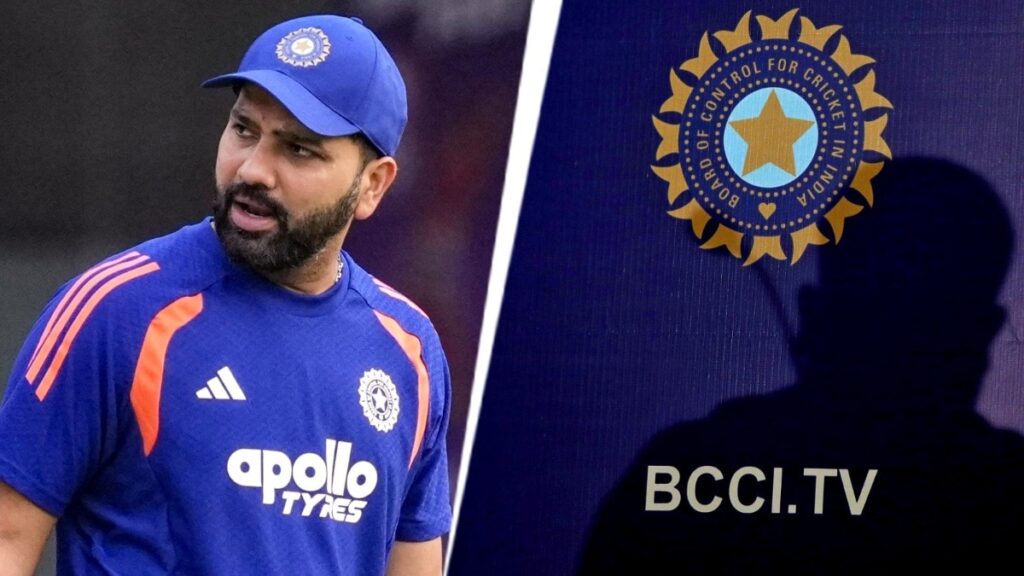
The ODI at Lord’s will not be former India captain Rohit Sharma’s last, BCCI secretary Devajit Saikia said late on Friday, July 17, amid growing speculation that Rohit no longer figured in the selectors’ and team management’s plans. Reports claimed India had decided to move on from the veteran opener ahead of the 2027 ODI World Cup, with the curtain set to fall on his career after the Lord’s ODI.
Saikia allayed those concerns, putting the rumours to rest. OK. Great. But why is the secretary of the Indian Cricket Board talking about Rohit Sharma’s retirement plans?
It sounds like a silly question. But the more you think about it, the stranger it gets.
Maybe Rohit never intended to retire in the first place. Or maybe he did.
But that isn’t the point.
Devajit Saikia is the secretary of the BCCI – the top administrative officer of the board. He is not the man calling the shots in the Indian dressing room. Yet there he was, assuring everyone that Rohit’s ODI career wasn’t ending at Lord’s.
You have to wonder what goes through an administrator’s mind when they suddenly want to set the career plans of one of India’s greatest cricketers.
Should cricket not be left to cricketing merit? India has a robust ecosystem for that, built by, guess who? The BCCI.
There are selectors to judge form, coaches to manage players, captains to lead the team and players to decide when enough is enough. An administrator’s job is everything around cricket: paperwork, broadcast deals, logistics, governance and budgets.
At this point, you might wonder: what’s the harm in one harmless comment?
I would like to argue that there is.
ONE MAN RULES ALL
It is no secret that the BCCI has traded its old, chaotic democratic veneer for a much slicker, far more absolute “one man rules all” philosophy. Notice the distinction here. Rules all, not governs all.
Governance requires a distribution of authority. It acknowledges roles and responsibilities. Ruling simply requires one person with direct access to the microphone.
Ever since Sourav Ganguly was nudged out of the president’s chair, the public communication around Indian cricket has increasingly flowed through the office of the secretary. During Jay Shah’s tenure, almost every major development surrounding the Indian team was communicated by him. The pattern has most certainly continued under Devajit Saikia.
Maybe that makes communication easier. Maybe it even keeps Indian cricket running smoothly. But it leaves behind an uncomfortable question. Why are capable men and women, many of whom have spent decades inside the game, being reduced to silence? And if they are not capable enough, why are they in the positions of power in the first place?
If the head coach or the chairman of selectors cannot address speculation surrounding a modern great, why are they occupying those positions in the first place?
HISTORY REPEATS ITSELF
Why are we talking about secretaries today?
Because we’ve watched this play before.
Cast your mind back to September 2021. Rumours were swirling that Virat Kohli was about to lose India’s T20I captaincy. Accountability is part of elite sport. Even a player of Kohli’s stature wasn’t immune from scrutiny after India’s multiple failures at ICC tournaments.
But while cricket debated Kohli’s future, the administrative machinery stepped in.
“There is no such proposal to replace Kohli and the team is led by Virat and we are backing him,” Jay Shah had declared.
“We are sensitive to the fact that such a proposal is not in the interest of the Indian team when it will take part in a World Cup.”
Forty-eight hours later, Virat Kohli resigned. It was a masterclass in institutional gaslighting.
Who exactly was the public supposed to believe? The BCCI secretary, who had categorically ruled out such a move? The head coach, who never publicly addressed the issue? Or the hurting Virat Kohli himself, who quietly walked away from a seven-year captaincy?
That was September 2021. Five years later, we are back in exactly the same place.
Once again, an administrator has become the face of a cricketing decision. Once again, the selectors have remained silent. Once again, the coach has remained silent. Once again, the player himself hasn’t spoken.
At this point, someone will inevitably ask, and they should ask: What was Saikia supposed to do? A microphone was thrust into his face.
Simple. He could have just said: “It is not my place to comment on a player’s future. Please ask the captain, the coach or the selectors.”
That’s it. End of the matter.
GOD SAVE INDIAN CRICKET
Whether Rohit Sharma retires after Lord’s, after the Asia Cup, after the World Cup, or two years from now is almost irrelevant.
The larger question is this: why has Indian cricket reached a point where the secretary is at the centre of power? Why can’t he pass the baton to the respective heads of the department, who are at their positions because they are capable.
If administrators become the spokespersons, then the people actually running the cricket team slowly stop mattering. Slowly, almost imperceptibly, the institution gets hollowed out from within.
Cricket deserves better than that. Institutions do too.
God save Indian cricket.
– Ends